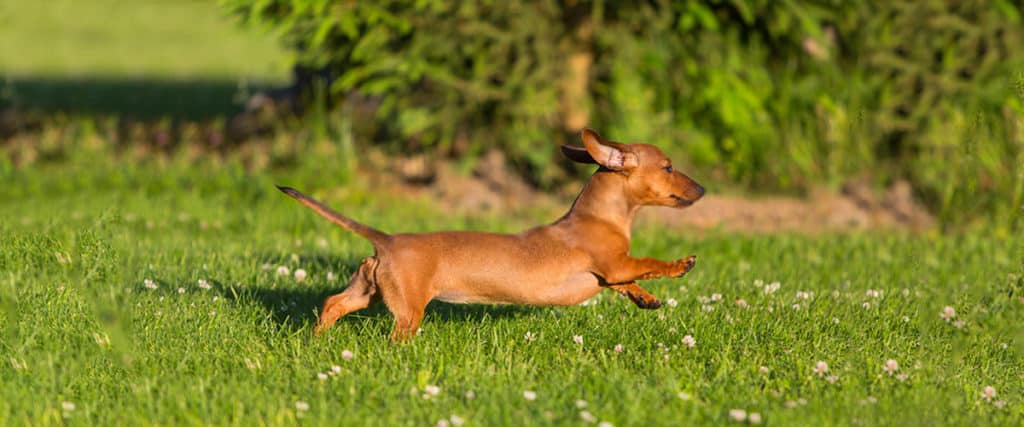
Congratulations — you’re about to welcome one of the most loyal, hilarious, and lovably stubborn dogs on the planet into your home.
Dachshunds are spunky, affectionate, and endlessly entertaining, with a big-dog bark packed into a compact little body. But they’re also a breed with very specific needs. Their famously long backs make them prone to spinal issues like IVDD, and their independent streak can make training feel like a battle of wills. The good news? With the right preparation and a little patience, you can sidestep most problems and enjoy many happy years with your Doxie — the breed is known for being wonderfully long-lived.
This guide walks you through everything a new owner needs: what to do before your puppy arrives, the supplies you’ll actually need, how to feed and groom your puppy, the all-important back-protection rules, and how to tackle training, socializing, and potty training a stubborn little hound. Let’s get your puppy off to the best possible start.

Quick Answer: Caring for a Dachshund Puppy
Caring for a Dachshund puppy comes down to five essentials: high-quality puppy food, gentle daily exercise, a harness (never a collar) to protect their neck and back, early and consistent positive-reinforcement training, and regular veterinary care.
Dachshunds are generally healthy and rewarding to raise, but their long backs and stubborn personalities mean a few breed-specific habits matter from day one. Get these right and you’ll have a confident, well-adjusted companion for years to come.
- Use a harness, not a collar — protects their delicate neck and spine
- No jumping on/off furniture — the #1 way to prevent back injury
- Feed AAFCO-approved puppy food in measured portions
- Train with positive reinforcement — Doxies don’t respond to harshness
- Socialize early to prevent fear and reactivity
What to Do Before You Get a Dachshund
Before bringing a Dachshund puppy home, it pays to do your homework. Research the breed’s characteristics, temperament, potential health issues, and care requirements so you know exactly what you’re signing up for.
A few things to sort out before you commit:
- Find a reputable source. Choose a responsible breeder who health-tests their dogs, or a reputable rescue organization.
- Assess your lifestyle. Consider your living situation, work hours, and activity level — and whether they fit a curious, attention-loving dog.
- Budget honestly. Dachshunds need regular veterinary care, food, toys, and supplies, plus a financial cushion for potential back-related health costs.
- Plan your time. Puppies need daily walks, playtime, training, and socialization to grow into well-adjusted adults.
Understanding the real commitment up front lets you make an informed decision — and gives your new puppy the care they deserve.

What to Expect From a Dachshund Puppy
Dachshunds are a spunky breed, famous for a big-dog bark housed in a compact little body. Even as puppies, these Doxies can be feisty — and incredibly eager for affection. With their curious nature, they’re always ready to test your boundaries and explore their new home right alongside you.
Loyalty runs deep in Dachshunds, but so does their stubbornness. That’s not a flaw — it’s heritage. Originally bred as expert underground hunters, they earned the name “badger dog” (that’s literally what Dachshund means in German). Their loud bark helped human hunting partners locate them while they dug beneath the earth, which is exactly why the breed is still so vocal today.
You’ll be in good company, too. Dachshunds have charmed legendary artists — Picasso adored his Dachshund Lump, and Andy Warhol immortalized his dogs Amos and Archie in his pop art.
Related post: The Best Dachshund Puppy Names
Is It Hard to Look After a Dachshund Puppy?
The honest answer: caring for any puppy is work, and Dachshunds come with a few breed-specific needs on top of the usual. None of it is hard once you know what to expect — it’s just a matter of building the right habits early.
Here’s what makes Dachshund care a little different:
- Coat care varies by type. Long-haired and wire-haired Dachshunds need regular grooming to keep their coats free of mats and tangles; smooth coats are lower-maintenance.
- Their backs need protecting. Those long backs and short legs make them prone to spinal injury, so safe handling matters from day one (more on this below).
- They’re stubborn. Dachshunds can be tricky to train and need a patient, consistent, reward-based approach.
Meet those needs and you’ll find Dachshunds are otherwise generally healthy, hardy little dogs who give back far more than they ask for.
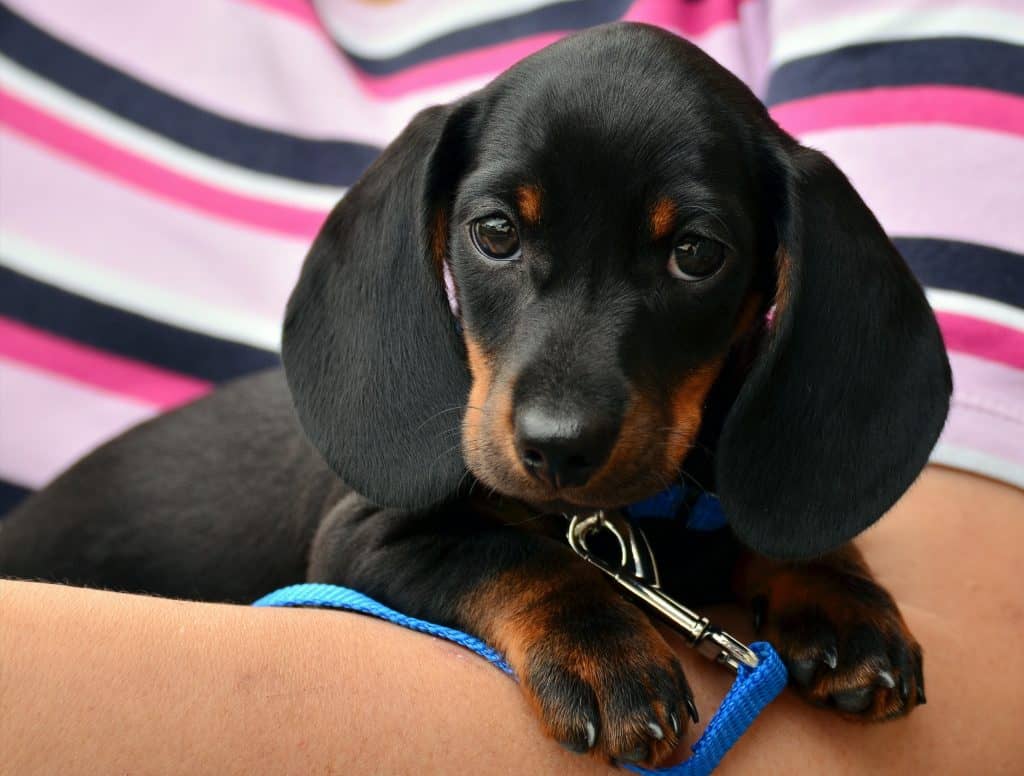
What You Need to Buy for Your Dachshund
Setting up before your puppy arrives makes those first days far smoother. Here’s your essential shopping list:
- High-quality puppy food
- Food and water dishes
- A comfortable bed
- A harness and leash (skip the collar for walks — more on that below)
- Crate or carrier
- Toys and chew bones
- Grooming tools, including a brush and nail clippers
- Training treats
- Poop bags and a scooper
📘 Want the complete list? Check out our full Dachshund Puppy Checklist (needs URL) for every essential item, organized and ready to shop.
The most important buy: a harness
Here’s the catch with Dachshunds: their delicate backs and necks mean a harness is non-negotiable. A collar puts pressure directly on the neck and spine when your puppy pulls — exactly what you want to avoid in a breed prone to IVDD. A well-fitted, step-in harness spreads pressure across the chest instead.
High-quality puppy food
Look for a complete-and-balanced formula with the AAFCO statement on the label (more on choosing food below). A quality puppy food sets the foundation for healthy growth.
Crate, bed, grooming tools & toys
A properly sized crate is invaluable for both safety and potty training. Pair it with a comfortable, supportive bed, the right grooming tools (a slicker brush is ideal for long- and wire-haired Doxies, plus quality nail clippers), and a few durable chew toys to keep that curious mind busy.
| Item | Why it matters | Shop |
|---|---|---|
| Crate / carrier | Safety, travel, and potty-training aid | Check on Amazon → |
| Orthopedic bed | Supports a long back during rest | Check on Amazon → |
| Nail clippers / grinder | Keeps nails short to protect posture and gait | Check on Amazon → |
| Slicker brush | Prevents mats in long/wire coats | Check on Amazon → |
| Durable chew toys | Mental stimulation and safe chewing | Check on Amazon → |
Bringing Your Dachshund Puppy Home
Bringing a new puppy home is exciting — and a little chaotic. A bit of prep makes all the difference.
Once you’ve chosen a name, set up a designated area for your puppy with a crate or bed, food and water dishes, and a few toys. Then puppy-proof your home by removing hazards like toxic plants and loose electrical cords, and blocking off any stairs your puppy shouldn’t be tackling yet.
From there, focus on creating a safe, comfortable environment where your puppy can thrive: plenty of play opportunities and a consistent routine for feeding, potty breaks, and training. When your puppy is old enough, consider a puppy training class or a professional trainer to lock in good socialization and basic obedience.
How to Care for a Dachshund Puppy: Daily Routine
Dachshund puppies thrive on consistent, attentive care. Here’s what a healthy daily and weekly routine looks like:
- Feeding: Offer a balanced, age-appropriate diet at regular intervals. Avoid overfeeding — extra weight is especially hard on a Dachshund’s back.
- Grooming: Brush weekly (more for long/wire coats), bathe every few months, and keep up with nail trimming and teeth brushing.
- Exercise: Once fully vaccinated, give your puppy daily walks and plenty of toys for mental and physical stimulation — but keep it gentle and low-impact while they’re growing.
- Health care: Schedule regular vet checkups, stay current on vaccinations, and keep up with parasite prevention.
We recommend visiting your vet early to map out a vaccination schedule, discuss effective parasite control, and raise any health questions you have.
Protecting Your Dachshund’s Back
This deserves its own section, because it’s the single most important thing you can do for a Dachshund’s long-term health. Because of their long backs and short legs, Dachshunds are prone to Intervertebral Disc Disease (IVDD) — a serious spinal condition. According to the American Kennel Club, it’s one of the breed’s most significant health concerns, and prevention starts in puppyhood.
🚨 Build these habits from day one: No jumping on or off furniture, no stair-climbing while young, always lift with support under both chest and rear, use a harness instead of a collar, and keep your puppy lean. Jumping down from a couch is one of the most common ways Dachshunds injure their spines.
A simple, high-impact fix is a pet ramp for the sofa or bed, so your Doxie can climb up and down safely instead of leaping.

Feeding Your Dachshund Puppy
Feeding your growing puppy a high-quality, complete, and balanced puppy food is one of the most important parts of early care. When choosing food, examine the ingredients closely, ask your vet for recommendations, and look for the AAFCO approval statement on the packaging — it confirms the food is nutritionally complete for your puppy’s life stage. Keep fresh water available all day; Dachshund puppies need to stay well hydrated.
📘 Not sure which brand? See our guide to the best food for Dachshunds to find the right fit for your puppy.
How Much Should You Feed?
As a general starting point, many Dachshund puppies eat around a half-cup to a full cup of kibble per day, split across meals. That said, the best guide is the feeding instructions on your chosen food (portioned by weight and age), confirmed with your vet.
| Puppy weight | Approx. daily food* | Meals per day |
|---|---|---|
| Up to 5 lbs | ~½ cup | 3–4 |
| 5–10 lbs | ~½–¾ cup | 3 |
| 10–16 lbs | ~¾–1 cup | 2–3 |
*General guideline only. Always follow your food’s label and your vet’s advice, and adjust to keep your puppy at a healthy, lean weight.
Monitor your puppy’s weight, check in with your vet regularly, and adjust portions to maintain a healthy growth rate — keeping a Dachshund lean is one of the kindest things you can do for their back.
Related post: What Should I Feed My Dachshund Puppy?
Tips for Training Dachshund Puppies
Let’s be honest: Dachshunds can be a challenge to train. That independent, stubborn streak is baked into a breed designed to make its own decisions underground, far from its handler. The trick isn’t to overpower it — it’s to work with it.
What works with Dachshunds:
- Positive reinforcement. Reward good behavior with treats and praise. Harsh, correction-heavy methods backfire with this sensitive, stubborn breed.
- Start early and stay consistent. Begin basic obedience as soon as your puppy comes home, and keep commands consistent across the whole household.
- Keep sessions short and fun. Doxies bore easily, so brief, upbeat sessions beat long drills.
- Plan for breed quirks. Dachshunds are very vocal and love to dig — both are hunting instincts that respond better to management and redirection than to scolding.
Good training treats — small, soft, and low-calorie — make reward-based training far easier without overfeeding.
For breed-specific help, see our guides to Dachshund training and how to stop your Dachshund from barking.

How to Socialize Your Dachshund Puppy
Socialization is a crucial part of puppy care, and it’s especially important for Dachshunds. Exposing your pup to the world early helps them feel secure and reduces the likelihood of fearful or aggressive behavior down the road.
Here’s how to socialize your Dachshund puppy well:
- Introduce a variety of friendly people and animals, making sure each experience stays positive.
- Enroll in puppy obedience classes to meet other pups and learn basic commands.
- Visit dog-friendly spaces like parks and pet stores that allow dogs.
- Invite visitors over so your puppy gets used to new noises, smells, and faces at home.
- Expose them to different environments and situations — car rides, neighborhood walks, errands — in small, positive doses.
Consistency is everything. Dedicate yourself to gentle, positive socialization and you’ll set your pup up for healthy relationships with people and other animals.
Related post: How Do I Stop My Dachshund Puppy From Biting?

How to Potty Train Your Dachshund Puppy
House training is a key part of your puppy’s early development. Dachshunds can be a little stubborn about it, but with patience and consistency, you’ll get there. Here’s a proven approach:
- Gather supplies first: a medium-sized crate, a blanket or pad, an enclosed playpen, and a water bottle before your puppy arrives.
- Size the crate right: big enough to turn around, but not so large they can potty in one corner and sleep in another.
- Pick a bathroom spot: choose one specific area of the yard as the designated potty place.
- Introduce it immediately: take your puppy to that spot as soon as you bring them home, and return frequently — especially for very young pups.
- Make the crate positive: use it for safety and to prevent accidents, never as punishment.
- Build a schedule: set mealtimes and supervise your puppy whenever they’re out of the crate.
- Time the trips: head outside after naps, playtime, and meals, and whenever they show signs of needing to go.
- Handle accidents calmly: never punish — simply take them to their spot, and clean thoroughly.
- Expand freedom gradually: let your puppy roam more of the house as their bladder control improves.
⚠️ Clean accidents thoroughly. Dogs are drawn back to spots that still smell like a bathroom. A good enzymatic cleaner fully breaks down odors that ordinary cleaners leave behind, which speeds up training.
Above all, be patient and consistent. Positive reinforcement, praise, and rewards for getting it right will help your puppy build good habits quickly.
Frequently Asked Questions
Are Dachshund puppies hard to take care of?
Dachshunds are generally healthy and rewarding to raise, but they do have breed-specific needs. Their long backs require careful handling to prevent injury, and their stubborn nature means training takes patience and consistency. With the right preparation, most owners find them very manageable.
Why should I use a harness instead of a collar on my Dachshund?
A collar puts pressure directly on the neck and spine when a dog pulls, which is risky for a breed prone to back problems. A well-fitted harness spreads that pressure across the chest, protecting your Dachshund’s delicate neck and back. Most experts recommend a harness for Dachshunds of all ages.
How much should I feed my Dachshund puppy?
Many Dachshund puppies eat around a half-cup to a full cup of kibble per day, divided into several meals. The best guide is your specific food’s label, portioned by weight and age, confirmed with your vet. Keeping your puppy lean is especially important for protecting their back.
When can I start walking my Dachshund puppy?
Wait until your puppy is fully vaccinated before walking them in public areas, then introduce gentle, low-impact daily walks. Keep early exercise short and avoid high-impact activity like jumping while your puppy is still growing.
How do I stop my Dachshund puppy from jumping on furniture?
Discourage jumping from the start, since leaping off couches and beds is a leading cause of back injury. Provide a pet ramp or steps so your Dachshund can get up and down safely, and lift them with support under both the chest and rear when needed.
Are Dachshunds easy to potty train?
Dachshunds can be a bit stubborn about potty training, so it often takes extra patience and consistency. Crate training, a fixed schedule, frequent trips to a designated spot, and thorough cleanup of accidents all speed up the process.
How often should I groom my Dachshund puppy?
Brush your puppy weekly, and more often for long-haired and wire-haired coats to prevent mats and tangles. Bathe every few months, and keep up with regular nail trimming and teeth brushing as part of the routine.
Why does my Dachshund puppy bark and dig so much?
Both behaviors trace back to their hunting heritage. Dachshunds were bred to bark loudly so hunters could locate them underground, and to dig after burrowing prey. These instincts respond best to management and redirection rather than punishment.
At what age should I start training my Dachshund puppy?
Start basic training and socialization as soon as your puppy comes home. Early, consistent, positive-reinforcement training takes advantage of their most receptive developmental window and helps prevent stubborn habits from setting in.
What supplies do I need before bringing a Dachshund puppy home?
At minimum: a harness and leash, food and water dishes, high-quality puppy food, a crate, a comfortable bed, grooming tools, durable toys and chews, training treats, and cleanup supplies. A pet ramp is also well worth adding to protect your puppy’s back early.

Final Thoughts: A Great Start Lasts a Lifetime
Raising a Dachshund puppy takes real commitment of time, effort, and resources — but the payoff is a devoted, hilarious companion who’ll be glued to your side for years. Get the foundations right, and most of the breed’s challenges become easy to manage.
The key takeaways:
- Protect that back: harness over collar, no jumping or stairs, lift with support, and keep your puppy lean.
- Prepare before arrival: gather supplies and puppy-proof your home ahead of time.
- Feed quality food: AAFCO-approved, measured portions, plenty of water.
- Train with patience: positive reinforcement, early start, short fun sessions.
- Socialize early and often: the best insurance against fear and reactivity.
Be patient, stay consistent, and lean on your vet whenever you have questions. With proper care and attention, your Dachshund puppy will grow into a beloved, well-adjusted member of the family — and bring you joy for many years to come.
Related post: How to Train Your Dachshund Puppy Not to Bite
Disclaimer: This article is for informational purposes only and is not a substitute for professional veterinary advice. Always consult a licensed veterinarian about your Dachshund puppy’s diet, exercise, vaccinations, and any health concerns, including back care and IVDD prevention.
Affiliate disclosure: This post contains Amazon affiliate links. If you click through and make a purchase, we may earn a small commission at no extra cost to you. We only recommend products we believe in — and your support helps keep Dachshund Central running. Thank you!