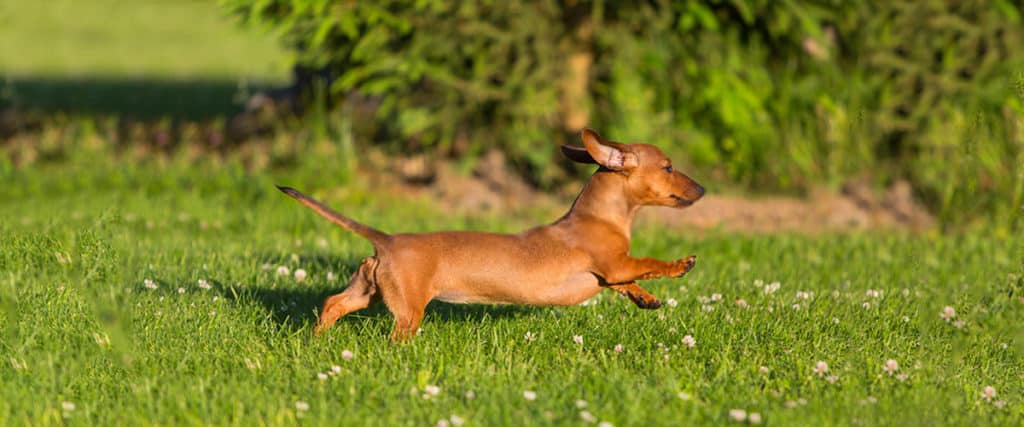
Few things are simpler than feeding your dog — and few things trip up Doxie families more than getting the portions right.
Dachshunds are small dogs with big appetites and an unfortunate talent for gaining weight, and even a little extra padding puts real strain on that famously long back. That’s exactly why a reliable Dachshund feeding chart is worth its weight in kibble: it takes the guesswork out of how much to put in the bowl.
In this guide you’ll find clear feeding charts for miniature and standard Dachshund puppies, an adult portion guide, a sensible feeding schedule, and practical tips to keep your Doxie at a healthy weight. Think of these numbers as a smart starting point — your vet and your dog’s own body will help you fine-tune from there.
Quick Answer: How Much Should a Dachshund Eat?
As a general guide, an adult miniature Dachshund needs roughly 1+1/8 to 1+1/2 cups of dry food per day, and an adult standard Dachshund roughly 1+5/8 to 2+1/8 cups — split across two meals. Puppies eat smaller portions more often.
That said, the exact amount depends on your dog’s age, weight, activity level, and the specific food you use, since calorie density varies a lot between brands. Always start with the feeding guide on your food’s packaging, then adjust based on your Doxie’s body condition and your vet’s input. Here’s the short version:
- Puppies (2 to 9 months): 3 meals a day, gradually shifting to 2.
- Adults: 2 meals a day on a consistent schedule.
- Watch the body, not just the chart: you should be able to feel the ribs easily and see a waist from above.
- When in doubt, ask your vet — especially for weight, diabetes, or back-health concerns.
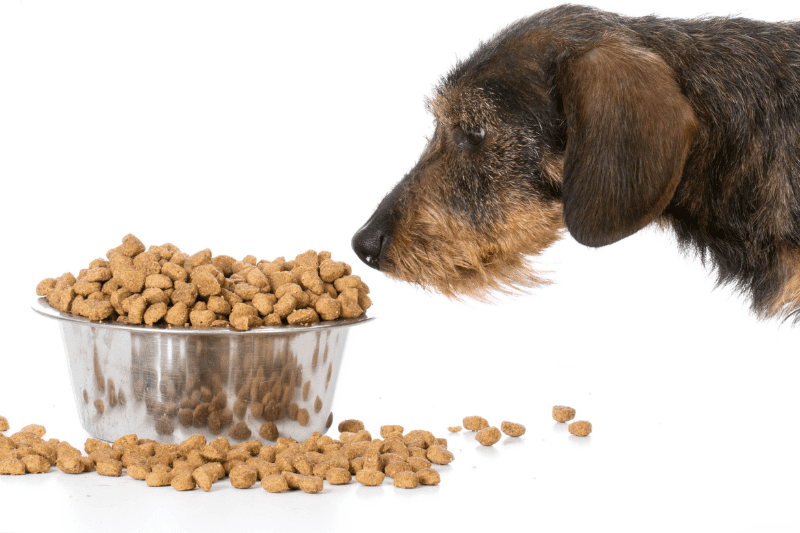
Choosing the Best Food for Dachshunds
Before you measure a single cup, it’s worth getting the food itself right. Dachshunds are prone to a few specific issues — obesity, diabetes, and of course their well-known risk of back problems — so the quality of what goes in the bowl matters as much as the quantity.
When comparing foods, look for:
- A named, high-quality protein first — chicken, turkey, fish, or lamb listed as the first ingredient.
- Healthy fats including omega-3 fatty acids, which support skin, coat, and joint health.
- A “complete and balanced” statement meeting AAFCO nutritional standards for your dog’s life stage.
- Appropriate calorie density — small breeds gain weight easily, so portion control matters.
One important note: every dog is an individual, and the food that suits one Doxie perfectly may not suit another. Your veterinarian is the best person to recommend a diet based on your dog’s age, weight, and health history. You can confirm whether a food meets recognized nutritional standards by checking for an AAFCO statement on the label.
📘 Want our specific recommendations? Check out our guide to the best dog foods for Dachshunds — with picks for puppies, adults, and weight management.
Feeding Schedule for Dachshunds
How often your Doxie eats matters as much as how much. A predictable schedule supports digestion, helps with house training, and makes it far easier to spot if your dog’s appetite changes.
| Life stage | Meals per day | Notes |
|---|---|---|
| Puppy (2 to 9 months) | 3 | Smaller, frequent meals support steady growth and stable blood sugar. |
| Older puppy (10 to 12 months) | 2 | Transition toward adult portions and an adult schedule. |
| Adult | 2 | Morning and evening meals at consistent times. |
Whatever the food, measure each meal with a proper measuring cup rather than eyeballing it — overfeeding is the single most common reason Dachshunds carry excess weight. Wet and dry foods differ in calorie density, so always check the brand’s own feeding guide too, and your vet can confirm the right amount for your individual dog.

Dachshund Puppy Feeding Charts
Puppies grow fast and have higher energy needs than adults, but their portions still need careful management. The charts below are based on Royal Canin guidance and assume a quality puppy formula. Treat them as a starting point and adjust to your puppy’s growth and body condition, with your vet’s guidance.
⚠️ Portions below are total cups per day, divided across the listed number of meals — not per meal.
Miniature Dachshund Puppy Feeding Chart
| Age (months) | Meals per day | Cups per day |
|---|---|---|
| 2 | 3 | 1 + 1/8 |
| 3 | 3 | 1 + 1/4 |
| 4 | 3 | 1 + 1/4 |
| 5 | 3 | 1 + 3/8 |
| 6 | 3 | 1 + 1/4 |
| 7 | 2 | 1 + 1/8 |
| 8 | 2 | 1 |
| 9 | 2 | 1 |
| 10 to 12 | 2 | Feed as adult |
Source: Royal Canin
Related post: Your Ultimate Guide to Dachshund Puppy Care and Training
Standard Dachshund Puppy Feeding Chart
| Age (months) | Meals per day | Cups per day |
|---|---|---|
| 2 | 3 | 1 + 1/2 |
| 3 | 3 | 1 + 3/4 |
| 4 | 3 | 1 + 7/8 |
| 5 | 3 | 2 |
| 6 | 3 | 1 + 7/8 |
| 7 | 2 | 1 + 3/4 |
| 8 | 2 | 1 + 1/2 |
| 9 | 2 | 1 + 3/8 |
| 10 to 12 | 2 | Feed as adult |
Source: Royal Canin
Adult Dachshund Feeding Chart
Once your Doxie reaches adulthood, two measured meals a day on a steady schedule is the standard. The range below reflects differences in size, activity, and metabolism — an active dog needs the higher end, a couch-loving senior the lower.
| Type | Meals per day | Cups per day |
|---|---|---|
| Standard Dachshund | 2 | 1 + 5/8 to 2 + 1/8 |
| Miniature Dachshund | 2 | 1 + 1/8 to 1 + 1/2 |
Source: Royal Canin
These figures are general guidelines and may need adjusting for your dog’s individual needs, activity level, and the calorie density of their food. Always keep fresh, clean water available, and check with your veterinarian to confirm the right amount and type of food for your Doxie at each life stage.
Related post: A Guide to Dachshund Diet and Exercise
How to Keep Your Dachshund at a Healthy Weight
Because excess weight directly increases the strain on a Dachshund’s long spine, keeping your Doxie lean isn’t just about looks — it’s genuine back-health protection. These habits make the biggest difference:
- Measure every meal. Use a measuring cup, not a scoop or your best guess. Small overages add up fast on a small dog.
- Count treats as calories. Treats should make up no more than about 10% of daily calories — and they come out of the daily total, not on top of it.
- Skip table scraps and human food. They unbalance the diet and pile on calories, and some are outright unsafe for dogs.
- Avoid free-feeding. Leaving food out all day makes it nearly impossible to track intake or notice appetite changes.
- Do the rib-and-waist check. You should be able to feel the ribs without pressing hard and see a defined waist when looking down from above.
- Weigh in regularly and adjust portions if the number creeps up — and loop in your vet for any ongoing concerns.
🚨 Carrying extra weight significantly raises a Dachshund’s risk of back injury (IVDD). Keeping your Doxie trim is one of the most important things you can do for their long-term health.

Frequently Asked Questions
How much should I feed my Dachshund per day?
An adult miniature Dachshund typically needs about 1+1/8 to 1+1/2 cups of dry food per day, and an adult standard Dachshund about 1+5/8 to 2+1/8 cups, split into two meals. The exact amount depends on weight, activity, and the calorie density of the food, so always check the packaging guide and your vet’s advice.
How many times a day should a Dachshund eat?
Puppies do best on three meals a day until around 9 months, then transition to two. Adult Dachshunds should eat two measured meals a day on a consistent schedule, which supports digestion and helps prevent overeating.
How much should I feed a Dachshund puppy?
It depends on age and size. A miniature puppy ranges from about 1+1/8 cups a day at 2 months to around 1 cup by 8 to 9 months, while a standard puppy ranges from about 1+1/2 cups up to 2 cups during peak growth before settling. Use the charts above as a starting point and adjust with your vet.
What is the best food for a Dachshund?
Look for a complete and balanced food (meeting AAFCO standards) with a named high-quality protein first and healthy fats including omega-3s. The best specific choice varies by dog, so consult your vet, especially if your Doxie has weight, joint, or digestive concerns.
Why is my Dachshund always hungry?
Dachshunds are notoriously food-motivated, so a begging dog isn’t necessarily an underfed one. If your dog is at a healthy weight and eating the recommended amount, resist the puppy eyes. A sudden, dramatic increase in hunger or thirst, though, is worth a vet visit to rule out conditions like diabetes.
How do I know if my Dachshund is overweight?
Run your hands along the sides — you should feel the ribs easily without pressing hard. Looking down from above, you should see a clear waist behind the ribs. If the ribs are hard to find or the waist has disappeared, it’s time to trim portions and check in with your vet.
Can I feed my Dachshund wet food instead of dry?
Yes, though wet and dry foods differ in calorie density, so the cup amounts in feeding charts (which assume dry food) won’t apply directly. Follow the wet food’s own feeding guide and adjust to keep your dog at a healthy weight. Many families use a mix of both.
How much water should a Dachshund drink?
Always keep fresh, clean water available at all times. A rough guideline is about one ounce of water per pound of body weight per day, but dogs self-regulate well. A sudden spike in drinking can signal a health issue, so mention it to your vet.
What human foods are unsafe for Dachshunds?
Avoid feeding table scraps in general, and never give chocolate, grapes, raisins, onions, garlic, xylitol (a sweetener), or alcohol, all of which are toxic to dogs. When in doubt, leave it out and ask your vet.
When should I switch my Dachshund from puppy food to adult food?
Most Dachshunds transition to adult food around 10 to 12 months, as reflected in the “feed as adult” rows in the charts above. Switch gradually over about a week, mixing increasing amounts of the new food in, and confirm timing with your vet.
Final Thoughts: Feed Smart, Keep Your Doxie Lean
A good feeding chart takes the guesswork out of the bowl, but the real secret is paying attention to the dog in front of you. Use these numbers as your starting point, measure every meal, and let your Doxie’s body condition and your vet guide the fine-tuning.
The key takeaways:
- Match portions to age and size — use the miniature and standard charts as your baseline.
- Feed on a schedule — three meals for puppies, two for adults.
- Measure everything, including treats — small overages add up fast on a small dog.
- Watch the body, not just the chart — feel for ribs and check for a waist.
- Keep your Doxie lean — it’s one of the best defenses against back trouble.
Get the food and the portions right, keep fresh water down, and check in with your vet when anything changes, and you’ll be giving your Dachshund the foundation for a long, healthy, happy life.
Related post: A Guide to Dachshund Diet and Exercise
Disclaimer: This article is for informational purposes only and is not a substitute for professional veterinary advice. Feeding amounts are general guidelines; consult your veterinarian to determine the right diet and portions for your individual Dachshund, especially if your dog has any health conditions.