
Standard or Miniature? It’s the first big decision every future Dachshund parent has to make — and it shapes everything from how much your Doxie eats to whether they’ll fit happily in a city apartment.
Dachshunds are one of America’s most beloved breeds, and for good reason. They’re loyal, hilarious, endlessly devoted, and packed with more personality than dogs three times their size. As the writer H.L. Mencken famously quipped, a Dachshund is “a half-dog high and a dog and a half long.” But here’s the thing: not all Doxies are built to the same scale, and choosing the right size matters more than most first-time owners realize.
In this guide, we’ll break down exactly how Standard and Miniature Dachshunds differ — their heights, weights, and the all-important chest measurement that breeders actually use. We’ll also cover the unofficial “Tweenie,” the tiny European Kaninchen, and a simple at-home test to figure out which size your own Dachshund is. By the end, you’ll know precisely what sets these sausage dogs apart.
Quick Answer: Standard vs Miniature at a Glance
The main difference is size. A Standard Dachshund weighs 16 to 32 pounds and stands 8 to 9 inches tall at the shoulder, while a Miniature Dachshund weighs 11 pounds or less and stands just 5 to 7 inches tall.
Both sizes belong to the same breed and share the same long-and-low body, big personality, and devoted temperament — they’re simply scaled differently. According to the American Kennel Club, Dachshunds come in just two official sizes in the US: Standard and Miniature.
- Standard Dachshund: 16–32 lbs, 8–9 inches tall
- Miniature Dachshund: under 11 lbs, 5–7 inches tall
- Tweenie (unofficial): 11–16 lbs — between the two sizes
- Kaninchen (Europe only): under ~7.7 lbs — smaller than a Mini
Where Miniature Dachshunds Came From
To understand the size difference, it helps to know the history. The Dachshund breed was developed in 17th-century Germany, where its name literally means “badger dog” — Dachs (badger) plus Hund (dog). These low-slung hounds were purpose-built to dive into burrows and take on badgers underground, which is exactly why they have those short legs, deep chests, and famously fearless attitudes.
The Miniature Dachshund came later, in the 1800s, when breeders wanted a smaller dog that could pursue smaller quarry like rabbits and squirrels. They achieved this through careful selective breeding — choosing the smallest healthy Dachshunds generation after generation until the Miniature variety became stable and consistent.
So a Miniature isn’t a different breed or a “runt.” It’s a deliberately developed, smaller version of the same working dog, with the same heritage of courage and tenacity packed into a more compact frame.
Related post: How Big Do Dachshunds Get?
The Key Differences Between Standard and Miniature Dachshunds
The most obvious difference between the two is size — Miniatures are noticeably smaller and lighter than Standards. But there are a few other distinctions worth knowing if you’re trying to tell them apart or decide which is right for you.
Beyond their build, both sizes come in the same three coat types (smooth, long-haired, and wire-haired) and the same wide range of colors and patterns. Temperament is largely shared too, though many owners find Miniatures a touch more timid and Standards a bit bolder and more confident — a difference that’s as much about the individual dog as the size category.
Here’s a side-by-side comparison of the two official sizes:
| Feature | Standard Dachshund | Miniature Dachshund |
|---|---|---|
| Weight (at 12 months) | 16–32 lbs (7–14 kg) | Under 11 lbs (up to ~5 kg) |
| Height at shoulder | 8–9 in (20–22 cm) | 5–7 in (13–18 cm) |
| Chest circumference (FCI) | 35 cm or more | 30–35 cm |
| Originally bred for | Badgers and larger burrowing game | Rabbits and smaller quarry |
| Best for | Families, houses with yards | Apartments, smaller homes |
The Different Sizes of Dachshunds (AKC vs FCI)
Here’s where it gets interesting: how many Dachshund sizes exist depends on which side of the Atlantic you’re on.
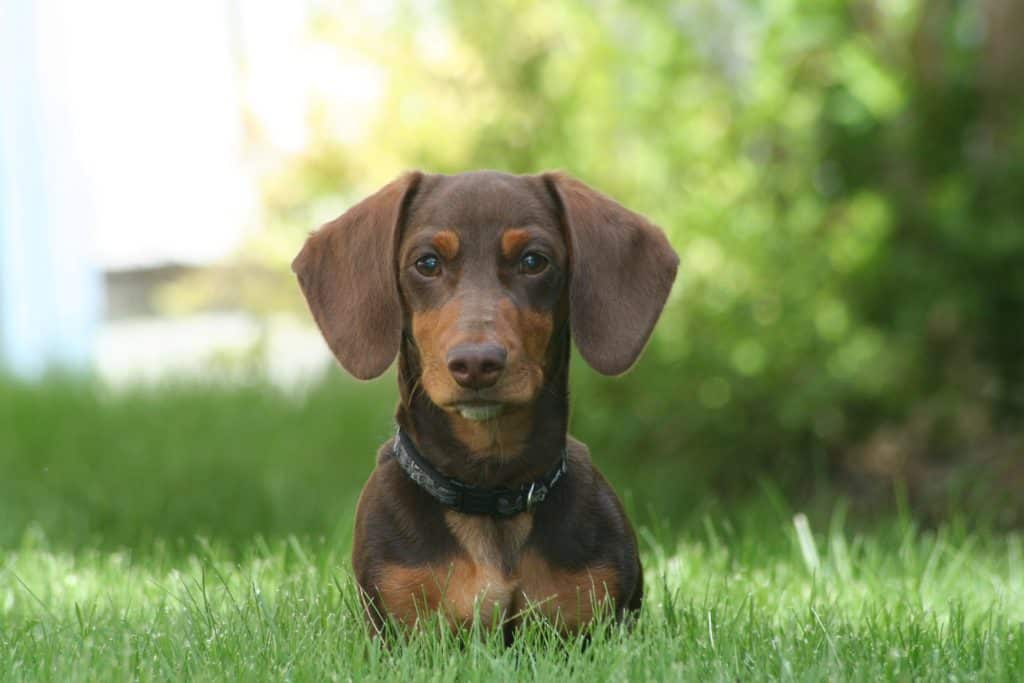
The American Kennel Club (AKC) recognizes just two sizes, judged primarily by weight: Standard and Miniature. The Fédération Cynologique Internationale (FCI) — the international standard used across much of Europe — recognizes three sizes, and it judges them by chest circumference rather than weight, measured once the dog is mature.
- Standard: chest circumference of 35 cm or more
- Miniature (Dwarf): chest circumference of 30–35 cm
- Kaninchen (Rabbit): chest circumference up to 30 cm
Why chest measurement? Because for a working burrow dog, the width of the chest determines whether it can physically fit down a tunnel — a far more practical measure for a hunter than weight on a scale.
How Big Is a Standard Dachshund?
A Standard Dachshund weighs between 16 and 32 pounds (about 7–14 kg) at 12 months of age, and stands 8 to 9 inches (20–22 cm) tall at the shoulder. Under the FCI system, a Standard has a chest circumference of at least 35 cm.
The Standard is the most popular size of Dachshund by a wide margin, and it’s a wonderful fit for families with children, other dogs, or a bit more space to roam. They’re sturdy, confident, and bold — every bit the fearless badger hound their ancestors were bred to be.
How Small Is a Miniature Dachshund?
A Miniature Dachshund stands just 5 to 7 inches (13–18 cm) tall at the shoulder and weighs under 11 pounds at 12 months of age. In practice, most Minis settle somewhere between about 7 and 11 pounds (3–5 kg) once fully grown.
Their compact size makes them a brilliant choice for apartment living or smaller homes. They tend to be a little more cautious and timid than their Standard cousins, but they’re every bit as loving and make devoted companions — especially for people living alone or in households without cats or small pets that might trigger that famous Doxie prey drive.
What Is a Tweenie Dachshund?
A “Tweenie” is the affectionate, unofficial term for a Dachshund that falls between the two recognized sizes — typically weighing 11 to 16 pounds. As the nickname suggests, they’re “in between” a Miniature and a Standard.
⚠️ Good to know: “Tweenie” is not an official category. It isn’t recognized by the AKC or any other kennel club, so you won’t see it on registration papers. It’s simply a handy label owners use for a Doxie that’s a little too big to be a Mini but a little too small to be a Standard.
Tweenies are perfectly healthy, normal dogs — the label just reflects the reality that size exists on a spectrum, and plenty of Dachshunds land right in the middle.
The Kaninchen: The Smallest Dachshund of All
If a Miniature seems small, meet the Kaninchen — “Kaninchen” means rabbit in German. This is the smallest of the three FCI sizes, and it’s recognized in continental Europe but not as a separate category by the AKC, which folds it in with the Miniature.
Kaninchen Dachshunds have a chest circumference of up to 30 cm (measured once they’re at least 15 months old). On the scales, males weigh roughly 3–3.5 kg (about 6.6–7.7 lbs) and females around 2–2.7 kg (about 4.4–6 lbs).
Bred in the 1800s to chase rabbits into their warrens, the Kaninchen remains popular with European hunters thanks to its small size, cleverness, and remarkable courage. These little dogs can be wonderfully friendly, yet brave when the moment calls for it — a useful trait when your job is confronting prey that outweighs you many times over.
Is My Dachshund Miniature or Standard?
Not sure which size you’ve got? You can get a good answer at home with a tape measure and a scale. The key is to measure from the floor to the withers — the ridge between the shoulder blades — rather than to the top of the head.
Here’s the simple test:
- Measure the height from the floor to the withers while your Doxie stands naturally.
- Weigh your dog (ideally once they’re at least 12 months old and fully grown).
- Compare to the ranges below.
| If your Dachshund is… | …they’re likely a |
|---|---|
| 5–7 in tall (13–18 cm) and under 11 lbs | Miniature |
| 11–16 lbs (between the two ranges) | Tweenie (unofficial) |
| 8–9 in tall (20–22 cm) and 16–32 lbs | Standard |
⚠️ Wait until they’re grown. Puppies are still filling out, so measurements before 12 months can be misleading. If you’re trying to confirm a puppy’s adult size, your breeder or vet can give you a much better estimate than a guess.
Related post: Types of Dachshunds: Sizes, Coats, and Colors
Which Size Is Right for You?
There’s no universally “better” size — only the one that fits your life. Both make wonderful companions, so it comes down to your home, your household, and what you’re looking for in a dog.
A Standard Dachshund may suit you if:
- You have a house, a yard, or simply more space.
- You want a sturdier dog for a family with children or other pets.
- You’d like a bolder, more confident personality.
A Miniature Dachshund may suit you if:
- You live in an apartment or a smaller home.
- You want a more portable, lap-sized companion.
- You live alone or in a quieter household — Minis can be a touch more reserved.
Whichever you choose, remember that both sizes share the same long backs — which means both need careful handling to protect their spines. Supporting your Doxie’s back and front when you lift them, and discouraging big jumps off furniture, matters at every size. For more on the breed’s signature spinal concerns, the Dachshund Club of America is a great resource.
Frequently Asked Questions
What is the difference between a Standard and Miniature Dachshund?
The primary difference is size. A Standard Dachshund weighs 16 to 32 pounds and stands 8 to 9 inches tall, while a Miniature weighs under 11 pounds and stands 5 to 7 inches tall. Both are the same breed with the same temperament and coat options — Minis are simply a smaller version developed to hunt smaller game.
How much does a Miniature Dachshund weigh?
A Miniature Dachshund weighs under 11 pounds at 12 months of age, with most settling between about 7 and 11 pounds (3 to 5 kg) once fully grown. The AKC defines the Miniature primarily by this weight ceiling.
At what age is a Dachshund fully grown?
Most Dachshunds reach their full adult size by around 12 months of age, though some continue filling out in muscle and weight slightly beyond that. This is why size categories are assessed at 12 months — measuring a younger puppy can be misleading.
What is a Tweenie Dachshund?
A Tweenie is an unofficial term for a Dachshund weighing between 11 and 16 pounds — too large to be a Miniature but too small to be a Standard. It is not recognized by the AKC or any kennel club, but it’s a common, affectionate label among owners.
What is the smallest type of Dachshund?
The smallest is the Kaninchen (“rabbit”) Dachshund, recognized in Europe under the FCI standard. Males weigh about 3 to 3.5 kg and females about 2 to 2.7 kg, with a chest circumference up to 30 cm. The AKC does not recognize it as separate from the Miniature.
How do I tell if my Dachshund is Miniature or Standard?
Measure from the floor to the withers (the ridge between the shoulder blades) and weigh your dog once it’s at least 12 months old. A Miniature is roughly 5 to 7 inches tall and under 11 pounds; a Standard is 8 to 9 inches tall and 16 to 32 pounds. Anything in between is often called a Tweenie.
Are Miniature Dachshunds good for apartments?
Yes. Their compact size makes Miniature Dachshunds well suited to apartments and smaller homes. Keep in mind that Dachshunds of all sizes were bred to bark loudly, so some training around vocalizing can help in close-quarters living.
Do Standard and Miniature Dachshunds have different temperaments?
They share the same core personality — loyal, clever, and famously stubborn. That said, many owners find Standards a bit bolder and more confident, while Miniatures can lean slightly more timid. Individual personality varies far more than size, though.
Is a Miniature Dachshund a separate breed?
No. Miniatures and Standards are the same breed, simply different size varieties. The Miniature was developed in the 1800s by selectively breeding smaller Dachshunds to create a dog suited to hunting smaller animals like rabbits.
Which Dachshund size is more popular?
The Standard Dachshund is the most popular size by a wide margin, valued as a family companion. Miniatures are also extremely popular, particularly with people in apartments or those wanting a smaller, more portable dog.
Final Thoughts: Same Big Heart, Different Size
Whether you fall for the sturdy confidence of a Standard or the pocket-sized charm of a Miniature, you’re getting the same wonderful breed — that unmistakable long-and-low silhouette, that fierce loyalty, and that outsized personality crammed into a famously stubborn little package.
The key takeaways:
- Size is the main difference: Standards are 16–32 lbs and 8–9 in tall; Miniatures are under 11 lbs and 5–7 in tall.
- The US and Europe count differently: the AKC recognizes two sizes by weight, while the FCI recognizes three by chest circumference, including the tiny Kaninchen.
- “Tweenie” is unofficial: it simply describes a Doxie between the two standard sizes (11–16 lbs).
- To check your dog’s size: measure floor-to-withers and weigh them once they’re fully grown at 12 months.
- Pick the size that fits your life: Standards shine in family homes, Minis in apartments — but both protect that long Doxie back the same way.
Have you always wanted a small dog but weren’t sure which type fit your home? Now you’ve got the full picture — and whichever size you choose, you’re in for years of devoted, hilarious companionship.
Related post: Why Do Dachshunds Like to Burrow Under Blankets?
Getting ready for a new arrival? Don’t miss our Essential Supplies Checklist for Your New Dachshund Puppy.
Disclaimer: This article is for informational purposes only and is not a substitute for professional veterinary advice. Size ranges are general guidelines; for guidance specific to your dog’s health, growth, or breeding, please consult your veterinarian or a reputable breeder.