Long-haired Dachshunds are some of the most stunning dogs in the canine world — those silky feathers on the ears, chest, and tail look like something out of a magazine. But behind that gorgeous coat is a real responsibility: without consistent grooming, that beautiful fur can quickly turn into a mat-filled mess that’s painful for your dog and expensive to fix at the groomer.
The good news? Long-haired Dachshund grooming is genuinely manageable at home. A few minutes of brushing each day, a bath every 6–8 weeks, and a trim every couple of months is usually all it takes to keep that silky coat looking its best — and your Doxie comfortable, healthy, and looking like the show dog they are.
This complete guide walks you through everything you need to know: the right tools, step-by-step brushing and bathing, common mistakes to avoid, popular haircut styles, and answers to every question new long-haired Doxie owners ask. Let’s get started.
Understanding the Long-Haired Dachshund Coat
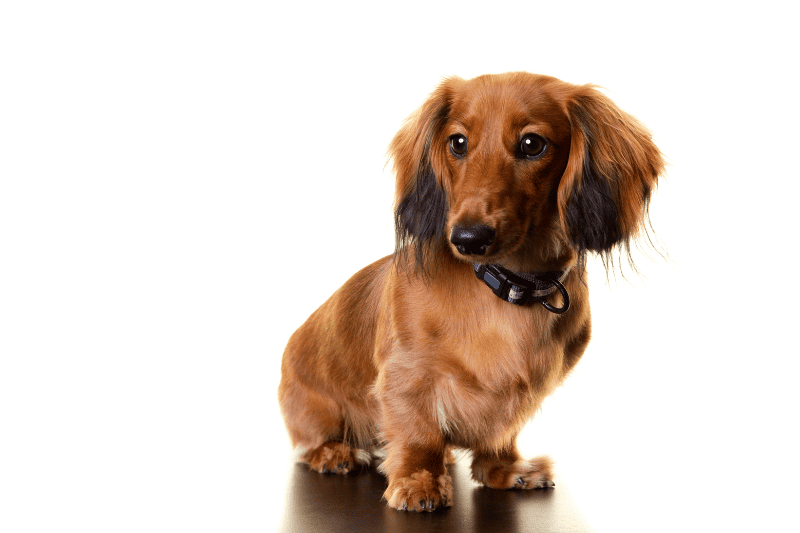
Before you grab a brush, it helps to understand what you’re working with. Long-haired Dachshunds have a double coat — a soft undercoat for insulation and a longer, slightly wavy outer coat that gives them their iconic flowing appearance.
The longest hair (called “feathering”) grows in specific spots:
- Behind the ears
- On the chest and underbelly
- On the back of the legs (“breeches”)
- Along the tail
These feathered areas are exactly where mats and tangles love to form — friction from walking, lying down, and play causes hairs to twist around each other. That’s why most of your grooming time will focus on these specific spots.
The double coat also acts as a natural temperature regulator: it keeps your Doxie warm in winter and surprisingly cool in summer. This is why the American Kennel Club and most veterinarians strongly advise against shaving — more on that below.
Why Regular Grooming Matters
Grooming isn’t just cosmetic — it’s a real health priority for long-haired Dachshunds. Skipping it leads to:
- Painful mats that pull at the skin and can only be removed by shaving
- Skin infections and hot spots from trapped dirt, moisture, and bacteria
- Ear infections, especially with their long, droopy ears
- Chronic itching and discomfort
- Worsened shedding as dead hair stays trapped in the coat
- Missed early warning signs of lumps, ticks, or skin conditions
Regular grooming also doubles as a health check-up — running your hands over your dog’s body daily means you’ll notice anything unusual (a lump, a sore, an embedded tick, a hot spot) days or weeks before it becomes a real problem.
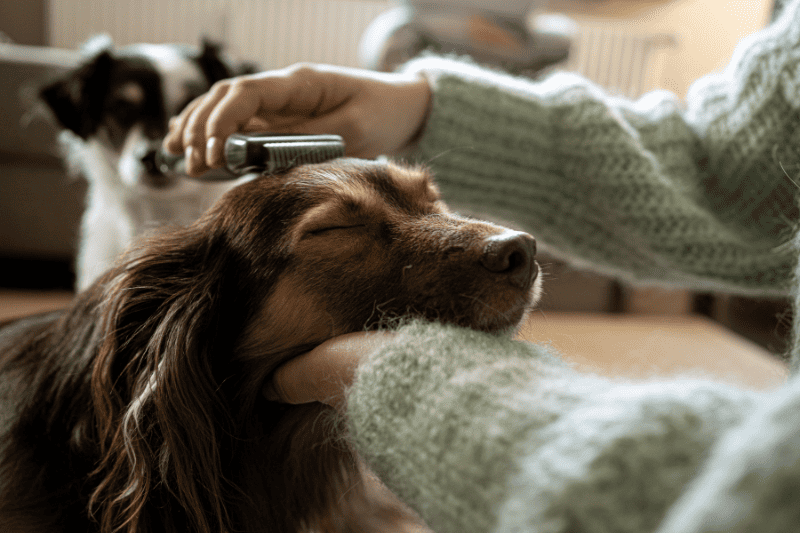
And here’s a bonus: long-haired Dachshunds who are groomed gently and consistently from puppyhood actually enjoy grooming as bonding time. It becomes a calm, connection-building ritual rather than a stressful chore.
How Often to Groom: Quick Reference Schedule
Here’s a cheat sheet you can save or screenshot for the typical long-haired Dachshund grooming routine:
| Task | How Often | Time Required |
|---|---|---|
| Quick brush | Daily (or every other day) | 3–5 minutes |
| Thorough brush-out | Weekly | 15–20 minutes |
| Bath | Every 6–8 weeks | 20–30 minutes |
| Trim/haircut | Every 8–10 weeks | 30–60 minutes |
| Nail trim | Every 4–6 weeks | 5–10 minutes |
| Ear check & clean | Weekly | 2–3 minutes |
| Teeth brushing | Daily ideal, weekly minimum | 2–3 minutes |
It sounds like a lot, but the daily/weekly tasks add up to less than 10 minutes a day. Make it part of your evening routine and it becomes second nature.
Essential Grooming Tools You’ll Need
The right tools make all the difference. Using the wrong brush on a long-haired Dachshund’s fine coat can break hairs, scratch the skin, and make the experience miserable for both of you.
Must-Have Tools
- Pin brush: Your daily go-to. The rounded pins glide through the silky coat without pulling. Ideal for general brushing and the feathered areas.
- Slicker brush: For deeper detangling and removing loose undercoat, especially during shedding seasons. Look for one with rounded pins to avoid scratching the skin.
- Steel/metal comb: Essential for finishing and finding small tangles a brush misses. Use it last to confirm the coat is mat-free.
- Dog-specific shampoo formulated for sensitive or long coats. Avoid human shampoo — it disrupts your dog’s skin pH.
- Dog-specific conditioner to keep the coat silky and reduce static.
- Detangling spray (leave-in) for stubborn knots before brushing.
- Sharp grooming scissors with rounded tips for safety around ears and paws.
- Thinning shears for blending and natural-looking trims.
- Nail clippers or grinder: Quality clippers or a Dremel-style grinder for nails.
- Microfiber towels: Highly absorbent for post-bath drying.
- Low-heat blow dryer (high-velocity dryers designed for dogs work best — never use a hot human hair dryer on a dog).
- Vet-approved ear cleaner (alcohol-free) and cotton balls.
- Dog toothpaste & finger or soft-bristled toothbrush (never use human toothpaste — xylitol and fluoride are toxic to dogs).
Nice-to-Have Tools
- Grooming table with a non-slip surface and grooming arm — saves your back and keeps your Doxie still and stable.
- Mat splitter or de-matting tool for tough mats.
- Sectioning clips to keep parts of the coat tidy while brushing other sections.
- Eye/face wipes for tear stains and around the mouth.
Click here to find the tools you need to groom your Dachshund.

Preparing Your Dog & the Grooming Area
The 5 minutes you spend setting up will make the next 30 minutes much smoother:
- Pick a calm time of day. Right after a walk, when your Doxie is a little tired, works beautifully.
- Set up an elevated, non-slip surface. A grooming table is ideal, but a non-slip bath mat on a counter or sturdy table works too. Always support your Dachshund’s spine when lifting them up — never grab them under the front legs.
- Have everything within arm’s reach. Tools, treats, towels — all laid out before you start.
- Stock up on high-value treats. Tiny pieces of cheese, chicken, or freeze-dried liver work as positive reinforcement.
- Keep the room well-lit. You’ll spot mats and skin issues much faster.
- Stay relaxed yourself. Dogs read your stress. Calm voice, slow movements, frequent praise.
- Take breaks if needed. Don’t push through resistance — split sessions into multiple short ones if your dog is uncomfortable.
For puppies and rescue Doxies new to grooming, start with just 30 seconds of brushing followed by a treat. Build up gradually. The goal is for your dog to associate the brush with good things, not anxiety.
Step-by-Step: Brushing & Detangling
Brushing is the single most important grooming task for a long-haired Dachshund. Done daily, it prevents 90% of problems before they start.
Daily Quick Brush (3–5 minutes)
- Use the pin brush first. Brush in the direction of hair growth, starting at the head and working back toward the tail.
- Hit the trouble spots: behind the ears, the chest, the back of the legs, and along the tail. These are mat-formation hot zones.
- Be gentle around the belly and underarms — the skin is thinner and more sensitive there.
- Finish with the metal comb on the feathered areas to confirm everything is tangle-free.
Weekly Thorough Brush-Out (15–20 minutes)
- Mist the coat lightly with detangling spray or a light water spray.
- Use sectioning clips if your Doxie has a thick coat — divide the body into sections and work each one fully.
- Start with the slicker brush, working through small sections at a time, gently brushing in layers from the skin out. Never yank on a tangle.
- Switch to the pin brush for the longer feathered areas.
- Comb-finish every section. The comb should glide through smoothly with no resistance.
How to Handle Mats
If you find a mat:
- Small mat? Spray with detangling spray, then gently work it out with your fingers or the metal comb, starting from the tip and working toward the skin.
- Tight mat near the skin? Don’t force it — that’s painful and dangerous. Use a mat splitter to slice through it, or carefully snip it out with grooming scissors held parallel to the skin.
- Multiple severe mats? Take your dog to a professional groomer. Trying to remove serious mats at home risks cutting the skin.
The golden rule: brush BEFORE you bathe. Water makes existing tangles tighten into mats almost instantly, and a mat that’s been wet is harder to remove.
Step-by-Step: Bathing & Drying
Bath time should happen every 6–8 weeks — or sooner if your Doxie rolls in something unsavory. Bathing more often than that strips the coat of natural oils and can lead to dry, itchy skin.
Before the Bath
- Brush thoroughly to remove all tangles (water tightens mats!).
- Place a non-slip mat in the tub or sink.
- Gather everything: shampoo, conditioner, towels, treats.
- Use lukewarm water — never hot, never cold.
- Place a cotton ball loosely in each ear to prevent water from getting deep into the canal (remove after bath).
During the Bath
- Wet the coat thoroughly, working from the neck back. Avoid spraying water directly into the face.
- Apply dog shampoo, working it into a gentle lather across the whole body. Don’t forget the underbelly, chest feathers, and tail.
- Wash the face last using a damp washcloth — never spray water on it.
- Rinse completely. Leftover shampoo is a leading cause of skin irritation. Rinse, then rinse again.
- Apply conditioner to the long-haired areas. Leave on for 1–2 minutes, then rinse thoroughly.
Drying
- Towel dry first — gently squeeze water out of the coat (don’t rub vigorously, as that creates tangles).
- Use a low-heat blow dryer while brushing simultaneously with the pin brush. Air-drying alone can cause mats as the coat dries unevenly.
- Keep the dryer moving — never hold it stationary on one spot.
- Comb through once dry to confirm a smooth, tangle-free finish.
Important: Always support your Dachshund’s spine when lifting them in and out of the tub. Their long backs are vulnerable to injury, and slippery wet conditions are higher risk.
Step-by-Step: Trimming & Shaping
Light trimming every 8–10 weeks keeps your long-haired Doxie looking neat and prevents the longest hairs from dragging through dirt or food. You don’t need to give a full haircut at home — just maintenance trims.
Areas to Trim at Home
- Around the paws: Trim the long hair between the paw pads and around the foot for traction and to prevent ice/snow buildup in winter.
- Sanitary area: Carefully trim the hair around the genitals and anus to keep things clean. Use rounded-tip scissors only.
- Ear edges: Light trim along the bottom edge of the ear flap to tidy stray hairs (don’t cut the feathering itself off — it’s iconic).
- Tail tip: Trim the very ends if they look raggedy, but keep the feathered “flag” intact.
- Belly hair: Light trim on the belly fringe if it’s dragging on the ground.
Trimming Tips
- Less is more. Trim small amounts and step back to check.
- Use thinning shears for blending. Straight scissors leave blunt lines; thinning shears create natural-looking transitions.
- Always cut with scissors parallel to the skin, never pointed at it.
- If in doubt, leave it for the professional groomer. A bad cut grows out, but a cut to the skin requires a vet.
For full haircut styles (puppy cut, show cut, etc.), it’s almost always better to leave it to a professional groomer until you’re very experienced — see the styles section below.
Nails, Ears & Teeth — Don’t Forget These!
Coat care is only part of grooming. These three often-overlooked tasks are crucial for your long-haired Dachshund’s health.
Nail Trimming
If you can hear your Doxie’s nails clicking on the floor, they’re too long. Long nails:
- Cause pain when walking
- Force the toes into unnatural positions
- Put extra strain on the spine — a serious concern for IVDD-prone Dachshunds
Trim every 4–6 weeks. Use sharp dog clippers or a nail grinder. Cut just below the “quick” (the pink area inside) — if you accidentally cut it, apply styptic powder to stop bleeding. Reward with treats throughout the process to keep it positive.
Ear Care
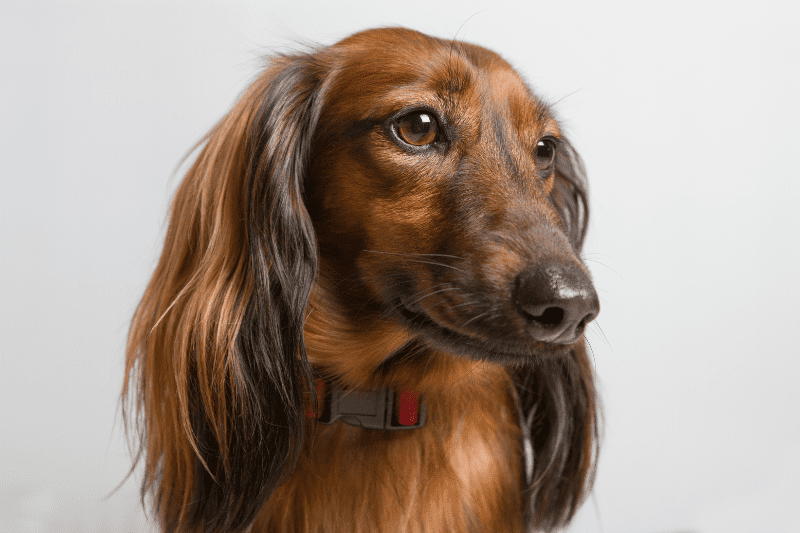
Long-haired Dachshunds are especially prone to ear infections because their long, floppy ears trap moisture and limit airflow. Inspect ears weekly:
- Look for: redness, brown discharge, foul smell, head shaking, scratching at ears
- To clean: Apply vet-approved, alcohol-free dog ear cleaner to a cotton ball or pad. Gently wipe the visible part of the ear canal — never push deep inside.
- Never use cotton swabs deep in the ear canal — risk of pushing debris in or damaging the eardrum.
- If you notice signs of infection — see your vet. Don’t try to treat at home.
Teeth Brushing
According to VCA Animal Hospitals, more than 80% of dogs over age 3 have some degree of dental disease. Small breeds like Dachshunds are especially prone to it.
- Ideal: Daily brushing with dog toothpaste and a soft toothbrush or finger brush.
- Minimum: 2–3 times per week.
- Never use human toothpaste — fluoride and xylitol are toxic to dogs.
- Add dental chews and water additives as supplemental support.
- Schedule a professional cleaning with your vet every 1–2 years.
Popular Long-Haired Dachshund Haircut Styles
If you’re heading to a groomer (or eventually attempting full styling at home), here are the most popular long-haired Dachshund cuts to choose from:
1. The Natural Cut
The least-is-more option. The coat stays at its natural length, with light tidying around the underbelly, ears, and paws. Best for owners who love the breed’s iconic flowing look but want a polished finish. Maintenance: Highest — daily brushing required.
2. The Puppy Cut
The hair is trimmed to about 1 inch all over the body, with slightly longer length on the ears. This style massively reduces brushing time while keeping enough coat for warmth and skin protection. Maintenance: Low — much easier to manage day-to-day. Best for: Active dogs, busy owners, or summer months.
3. The Best in Show Cut
The full glamour treatment — long, flowing coat carefully shaped to highlight the breed’s natural lines. Each section of hair is examined and shaped per AKC show standards. Maintenance: Very high — usually requires regular professional grooming.
4. The Summer/Trim Cut
A middle ground — the body coat is trimmed shorter (about 1–2 inches) but the iconic feathering on the ears, chest, and tail is preserved. Maintenance: Moderate. Best for: Hot climates or owners who want some breed character without daily brushing.
Important: No matter the style, never shave a long-haired Dachshund down to the skin. Their double coat is a built-in temperature regulator — shaving it can cause heat stroke in summer (yes, really), permanent coat damage, and skin issues.
5 Common Mistakes to Avoid
Even loving owners make these grooming missteps. Here’s what to watch out for:
Mistake #1: Bathing Too Often
Bathing more than once a month strips the coat’s natural oils, leading to dry skin, dandruff, and a dull coat. Stick to every 6–8 weeks unless your Doxie gets genuinely dirty.
Mistake #2: Brushing Only the Top Layer
Long-haired Dachshunds have an undercoat where mats actually start. If you only brush the surface, mats form underneath unseen until they’re tight against the skin. Brush in layers, working from skin to surface.
Mistake #3: Shaving the Coat
It seems like a kindness in summer, but it isn’t. The double coat insulates against heat as well as cold, and shaving can cause “post-clipping alopecia” where the coat grows back patchy or thicker. Trim, don’t shave.
Mistake #4: Skipping the Daily Brush
Going even 3–4 days without brushing a long-haired Dachshund is enough for tangles to begin. Once daily brushing becomes a habit, it takes less than 5 minutes and prevents matting entirely.
Mistake #5: Forcing Through a Mat
Yanking a brush through a tight mat hurts your dog and can tear the skin. Always loosen with detangling spray and patience first, or carefully cut the mat out with rounded-tip scissors held parallel to the skin.
Video Demonstration
This video walks through the long-haired Dachshund grooming process from start to finish:
How to Maintain a Healthy Coat
A beautiful coat starts from the inside out. Even the best brushing technique can’t compensate for poor nutrition or skin issues. Here’s how to support coat health holistically:
Feed a Quality, Balanced Diet
Look for foods with named protein sources, omega-3 and omega-6 fatty acids, and no excessive fillers. A healthy diet directly impacts coat shine and skin condition.
Related post: A Guide to Dachshund Diet and Exercise
Add Omega-3 Supplements
Fish oil supplements (high in EPA and DHA) reduce skin inflammation and visibly improve coat shine. Most veterinarians recommend them for long-haired breeds.
Keep Up With Daily Brushing
Daily brushing distributes the skin’s natural oils through the coat — that’s what gives a healthy Dachshund coat its signature gleam. Related post: Do Dachshunds Need Grooming?
Stay Consistent With Vet Visits
Skin issues, parasites, and hormonal imbalances can all cause coat problems. Annual vet checkups catch issues before they affect the coat’s appearance.
Manage Shedding
Long-haired Dachshunds shed moderately year-round with seasonal blow-outs in spring and fall. Daily brushing is your best defense against tumbleweeds of fur in your home. Related post: Do Long-Haired Dachshunds Shed?
Keep Their Weight Healthy
Overweight Dachshunds are prone to skin folds that trap moisture and bacteria — and excess weight worsens IVDD risk too. A healthy weight helps everything: coat, skin, and spine.

Frequently Asked Questions
How often should I brush my long-haired Dachshund?
Daily is ideal. At minimum, several times a week — but daily brushing prevents 90% of grooming problems before they start. Long-haired Dachshunds are especially prone to mats behind the ears and on the tail.
Do long-haired Dachshunds shed a lot?
Yes — long-haired Dachshunds are typically the heaviest shedders among the three Dachshund coat types. Daily brushing dramatically reduces the amount of hair around your home.
Related post: Do Long-Haired Dachshunds Shed?
Is it OK to shave a long-haired Dachshund?
No. Their double coat insulates against both cold and heat — shaving can cause heatstroke, sunburn, and “post-clipping alopecia” (where the coat grows back patchy or coarser). Stick to trimming, never shaving down to the skin.
What’s the best brush for a long-haired Dachshund?
A pin brush for daily use, paired with a slicker brush for weekly thorough brush-outs and a steel comb for finishing. The AKC specifically recommends pin brushes for long-haired varieties.
How do I clean a long-haired Dachshund’s ears?
Inspect weekly. To clean, apply vet-approved alcohol-free ear cleaner to a cotton ball or pad and gently wipe the visible part of the ear. Never use cotton swabs deep inside the ear canal, and stop if you see redness, discharge, or smell — that’s a vet visit.
How do I keep my Dachshund’s fur soft?
Brush daily (it distributes natural skin oils through the coat), use a quality dog conditioner after every bath, and add an omega-3 fatty acid supplement to their diet. A healthy coat starts from the inside out.
Can I put coconut oil on my Dachshund?
Coconut oil can be applied topically to dry spots or added in small amounts to food, but check with your vet first. Some dogs are allergic, and excessive use can lead to weight gain. It’s not a replacement for proper grooming.
How often should I bathe a long-haired Dachshund?
Every 6–8 weeks for most long-haired Doxies. More often than that strips the coat’s natural oils and can cause dry, itchy skin. If your dog gets dirty between baths, a damp cloth wipe-down or pet wipes work well.
Should I cut my long-haired Dachshund’s hair in summer?
A “summer trim” is fine — but ideally have a professional groomer do it. Never shave the coat down. The puppy cut (about 1 inch all over) is a great compromise between coolness and coat protection.
How much does professional grooming cost for a Dachshund?
Typically $40–$80 per visit for a long-haired Doxie, depending on your location, the salon, and the cut. Mobile groomers and high-end salons charge more.
At what age should I start grooming my Dachshund puppy?
Right away. Get your puppy comfortable with the brush, the dryer noise, and being touched on paws and ears starting at 8–10 weeks old. Even if there’s barely any coat to brush, the routine builds the foundation for a stress-free grooming life.
Final Thoughts: A Beautiful Coat, the Easy Way
Grooming a long-haired Dachshund can feel intimidating when you first bring one home — all that beautiful fur, all those potential tangles. But here’s the truth: 5 minutes a day of brushing prevents 90% of grooming problems. Combine that with a bath every couple of months, regular nail trims, and a professional groomer visit twice a year, and your Doxie will look stunning year-round.
The bigger gift of consistent grooming isn’t even the gorgeous coat — it’s the bond it builds. Five minutes of gentle brushing while you watch TV becomes a quiet ritual you both look forward to. Your hands learn every inch of your dog’s body, which means you’ll catch ticks, lumps, or sore spots immediately. And your Doxie associates grooming with being cared for, loved, and safe.
So pick up that pin brush, set up a comfy spot, grab some treats, and get started. Your long-haired Dachshund — and your floors, furniture, and clothing — will thank you for it.
Read more about Dachshund grooming: Do Dachshunds Need Grooming?
Disclaimer: This article is for informational purposes only. Always consult your veterinarian or a professional groomer for advice specific to your individual dog, especially if your Dachshund has skin conditions, allergies, or behavioral concerns about grooming.
Affiliate disclosure: This post contains Amazon affiliate links. If you click through and make a purchase, we may earn a small commission at no extra cost to you. We only recommend products we believe in — and your support helps keep Dachshund Central running. Thank you!