One look at a Dachshund — those little legs, that long sausage body, those soulful eyes — and the question pops up almost automatically: “Is this dog a lap dog?”
It’s a fair thing to wonder. Dachshunds (also called Doxies, sausage dogs, or wiener dogs) look made for laps. Small, snuggly, and famously affectionate, they seem like the obvious cuddle companion.
But here’s where it gets interesting: by official definition, Dachshunds are not lap dogs. They were bred for something very different from sitting prettily on velvet cushions. Yet ask any Dachshund owner, and they’ll tell you their Doxie spends 90% of their free time glued to a human lap.
So what’s the real answer? Let’s settle it.
Related post: Are Dachshunds Good for First-Time Owners?
Table of Contents
- Quick Answer: Are Dachshunds Lap Dogs?
- What Actually Counts as a “Lap Dog”?
- Why Dachshunds Aren’t Technically Lap Dogs
- But Why Do Dachshunds Love Cuddling So Much?
- Do All Dachshunds Like Laps Equally?
- Are Dachshunds Good Pets in General?
- 7 Tips for Cuddling a Dachshund the Right Way
- Frequently Asked Questions
- Final Thoughts
Quick Answer: Are Dachshunds Lap Dogs?
Technically no, but functionally yes.
Dachshunds were bred as small, scrappy hunting hounds — not as companion lap dogs in the historical sense. According to the American Kennel Club, the Dachshund belongs to the Hound Group, developed in Germany centuries ago to hunt badgers, rabbits, and other burrowing animals.
That means they’re working dogs at heart — bold, independent, alert, and built for serious tasks. However, modern Dachshunds also happen to be intensely affectionate, deeply loyal, and obsessed with their humans. So while they don’t fit the textbook definition of “lap dog,” they absolutely act like one most of the time.
What Actually Counts as a “Lap Dog”?
The term “lap dog” has a real, specific meaning. True lap dogs are breeds that were specifically bred for companionship — to sit in their owner’s lap, provide warmth, and offer affection. Their entire purpose is to be a comforting, low-energy companion.
Classic lap-dog breeds include:
- Cavalier King Charles Spaniel
- Maltese
- Pekingese
- Pomeranian
- Shih Tzu
- Bichon Frise
- Pug
- Havanese
These breeds belong to the Toy Group in AKC classification — a group defined entirely by companion-animal traits. Dachshunds, by contrast, are in the Hound Group, with their identity rooted in working ability, prey drive, and bold personality.
Why Dachshunds Aren’t Technically Lap Dogs
To understand why, you have to know what Dachshunds were actually built to do. The name says it all: Dachs means “badger” and Hund means “dog” in German. They are, quite literally, badger dogs.
According to Hill’s Pet Nutrition, Dachshunds were developed centuries ago in Germany with:
- Short, powerful legs built for digging
- Long, slim bodies for slipping into burrows
- Loud, deep howls so hunters could track them underground
- Loose skin to protect them from being injured by prey
- Bold, independent temperaments for facing off with badgers
That’s not a lap-dog résumé. The AKC’s breed standard literally describes the Dachshund as “clever, lively, and courageous to the point of rashness.” Translation: this is a hunter wearing a sausage costume.
Their working heritage is why Dachshunds today still:
- Have a strong prey drive (squirrels, beware)
- Love digging — in your yard, in your couch, in your blankets
- Bark or howl at, well, basically everything
- Show stubborn, independent streaks during training
- Think they’re the size of a Rottweiler
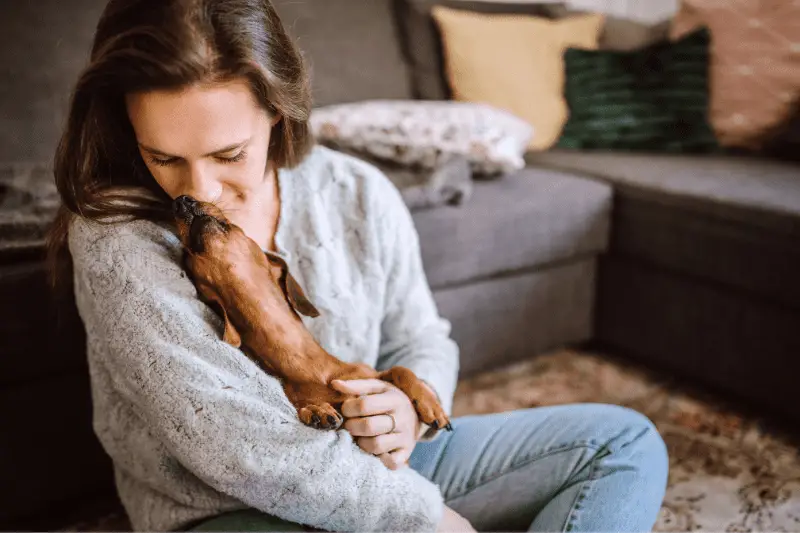
But Why Do Dachshunds Love Cuddling So Much?
Here’s the wonderful contradiction: despite their fierce hunting roots, Dachshunds are some of the most cuddle-obsessed dogs you’ll ever meet. There are real reasons for that.
1. They’re Burrowers
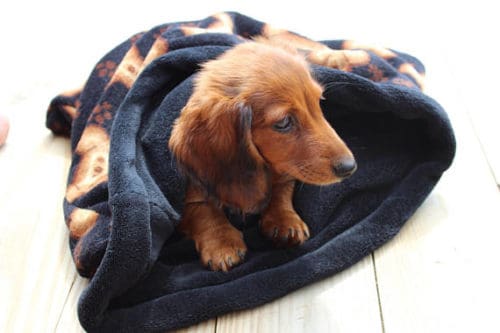
Dachshunds were bred to dive into dark tunnels — and that instinct didn’t go away. It just transferred to your blanket pile. A warm lap under a throw blanket is basically a perfect badger den.
2. They Bond Intensely With Their Person
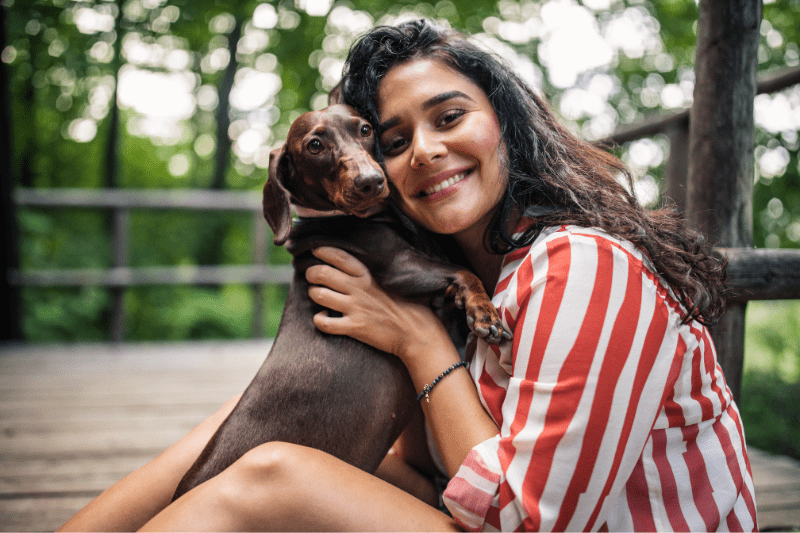
Doxies are famous “velcro dogs” who form deep, exclusive attachments to their favorite human. Climbing into your lap is their way of saying “you’re mine, and I’m yours.”
3. They Get Cold Easily
With short coats (especially smooth-coated varieties) and tiny bodies, Dachshunds chill quickly. Your lap is a heated bed they don’t have to plug in.
4. They’re Pack Animals
Hounds were bred to work and live in groups. To your Dachshund, you’re the pack — and pack members stay close to each other.
Do All Dachshunds Like Laps Equally?
Not quite. Just like people, every Dachshund has their own personality — but breeders and longtime owners have noticed some general patterns by coat type:
| Coat Type | General Personality | Lap-Friendly? |
|---|---|---|
| Longhaired | Calm, mellow, gentle | ★★★★★ Most lap-loving |
| Smooth-coated | Energetic, classic Doxie | ★★★★ Loves snuggling, also loves chasing |
| Wirehaired | Outgoing, clownish, terrier-like | ★★★ Affectionate but more independent |
These are generalizations, of course — your specific dog might break the mold entirely. Other factors that influence lap-loving behavior include:
- Age: Puppies are wiggly; senior Doxies are professional cuddlers.
- Size: Miniature Dachshunds tend to be more lap-portable, but standards love laps too.
- Socialization: Well-socialized Doxies bond easily and seek physical closeness.
- Past experiences: Rescue Doxies may take time to warm up but often become extra-attached.
Are Dachshunds Good Pets in General?
Absolutely — but they’re a specific kind of good. Dachshunds are loyal, playful, intelligent, and adaptable to apartments or houses. They can also be stubborn, vocal, and demanding of attention. The right owner loves both sides.
What Dachshunds need to thrive:
- Daily exercise. Two moderate walks a day plus play. Despite their size, they’re surprisingly energetic hounds.
- Mental stimulation. Smart dogs get bored fast. Puzzle toys, training games, and sniff-walks are gold.
- Patient, consistent training. Positive reinforcement works far better than firm corrections — they shut down with harsh handling.
- Early socialization. Get them comfortable around new people, dogs, and environments while they’re young.
- Back-friendly living. Avoid stairs and jumping, use ramps for furniture, keep their weight in check. Dachshunds are highly prone to Intervertebral Disc Disease (IVDD) due to their long spines.
- Lots of human time. They hate being left alone for long stretches.
If you can offer those things, you’ll get a devoted, hilarious, fiercely loyal companion who will remind you every day that you are their entire world.
Related post: Are Miniature Dachshunds Good Pets?

7 Tips for Cuddling a Dachshund the Right Way
If you’re going to lap-dog with a Dachshund, you need to do it Doxie-style — meaning back-safe. Their long spines are vulnerable to injury, and improper lifting or jumping is a leading cause of IVDD.
1. Always Lift With Two Hands
Support both the chest and hindquarters. Never scoop a Dachshund up by the front legs only — it puts dangerous pressure on the spine.
2. Don’t Let Them Jump On or Off Your Lap
Lift them up. Lower them down. Even short jumps can cause cumulative spinal damage over time.
3. Use a Couch Ramp or Stairs
If your Dachshund spends most of their time on the couch with you, install a pet ramp or doggy stairs so they can come and go safely on their own.
4. Keep Their Back Straight
When holding your Doxie, make sure their spine stays in a horizontal line. Avoid letting their long body droop or twist when they’re on your lap.
5. Watch for Pain Signs
If your dog suddenly stops jumping into your lap, becomes reluctant to move, or yelps when picked up, it could be back pain. See your vet promptly.
6. Set Cuddle Boundaries
Cuddling is great — being clingy 24/7 isn’t. Make sure your Doxie also gets independent rest time so they can self-soothe and avoid separation anxiety.
7. Make It Cozy
A soft blanket on your lap is basically Dachshund heaven. Their burrowing instincts will kick in, and they’ll happily nest there for hours.
Related post: Do Dachshunds Like to Cuddle?
Frequently Asked Questions
Are Dachshunds technically considered lap dogs?
No. Dachshunds belong to the AKC’s Hound Group and were bred for hunting, not companionship. True lap dogs are typically in the Toy Group. That said, Dachshunds love laps and act like lap dogs in everyday life.
Do Dachshunds prefer one person?
Often, yes. Dachshunds are famous for forming an especially close bond with one favorite human — usually whoever feeds them, walks them, or spends the most time with them. They’ll still love the rest of the family, but their lap of choice is usually a specific one.
Are miniature Dachshunds more lap-friendly than standards?
Both love laps, but miniatures (under 11 pounds) are obviously easier to fit on yours. Standard Dachshunds (16–32 pounds) will still happily try, even if they hang off both ends.
Can Dachshunds be left alone for long periods?
Not really. Most behaviorists recommend no more than 4 hours alone for an adult Dachshund. They’re prone to separation anxiety and can become destructive when isolated for too long.
Do Dachshunds like other dogs?
With proper socialization, yes — though they often prefer the company of other Dachshunds. Their bold “I-am-a-large-dog” attitude can sometimes get them into trouble with bigger breeds, so supervised introductions matter.
Is it safe for Dachshunds to sit on my lap all day?
It’s safe, but make sure they get up to walk, exercise, and stretch regularly. Long sedentary periods can contribute to weight gain, which is one of the biggest risk factors for back problems in this breed.
Final Thoughts: Hunter’s Heart, Cuddler’s Soul
So, are Dachshunds lap dogs? Officially, no — but in practice, they’re some of the best lap dogs around.
They’re little hunters with the souls of professional snugglers. They have a fierce bark, a stubborn streak, and a 400-year-old hunting heritage — and they will absolutely climb onto your lap the second you sit down and refuse to leave until you’ve forgotten what your legs feel like.
That contradiction is exactly what makes Dachshunds so special. You’re not just getting a cuddle bug — you’re getting a tiny, brave, opinionated, devoted little dog who picked you as their person and intends to spend the next 12 to 15 years proving it.
If that sounds like the kind of pet you’re looking for, a Dachshund might be your perfect match.
Related post: Unveiling the Temperament of Dachshunds
Disclaimer: This article is for informational purposes only. Every dog is an individual, and breed traits are general tendencies, not guarantees. If you’re considering adopting a Dachshund, please research thoroughly and consult reputable breeders or rescue organizations.