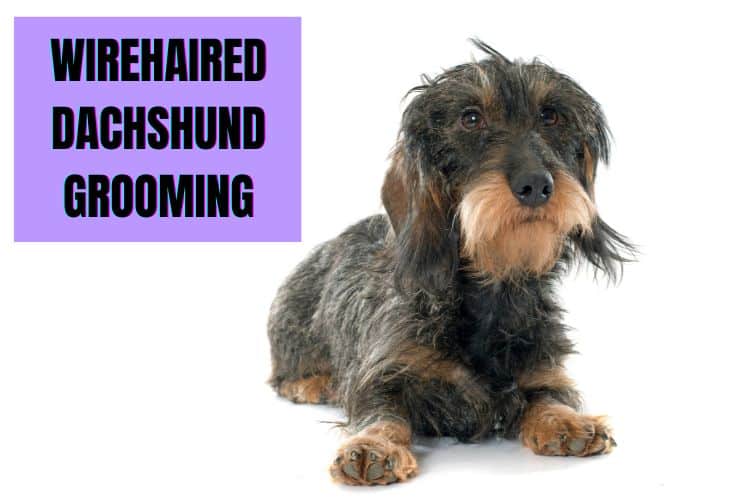
That iconic beard. Those expressive eyebrows. The scruffy, wiry coat that makes a Wire-Haired Dachshund instantly recognizable. Wire-haired Doxies have one of the most distinctive looks in the dog world — but maintaining that signature appearance takes a different grooming approach than smooth or long-haired varieties.
Wire-haired Dachshunds have a double coat with a tough, wiry outer layer originally bred to protect them from thorns, brambles, and harsh weather while hunting underground. That same coat now requires hand-stripping (rather than clipping) to maintain its texture and color, plus regular brushing, beard care, and routine maintenance to stay healthy and look its best.
This complete guide covers everything you need to know: how to identify and care for the different wirehair coat textures, the essential grooming tools, step-by-step hand-stripping technique, brushing and bathing routines, beard and eyebrow trimming, plus everything else (nails, ears, eyes, teeth) — so you can keep your Wirehaired Doxie looking sharp and feeling great.
Affiliate disclosure: This post contains Amazon affiliate links. If you click through and make a purchase, we may earn a small commission at no extra cost to you. We only recommend products we believe in — and your support helps keep Dachshund Central running. Thank you!
Why Grooming Matters for Wirehairs
Wire-haired Dachshunds are surprisingly low-shedding compared to other Doxies — but that doesn’t mean they’re low-maintenance. Their unique coat needs regular hands-on care to stay healthy. Without proper grooming, you’ll see:
- Mats and tangles — especially behind the ears, in the beard, and on the chest
- Dead, dull hair buildup — wirehair coats hold onto dead hair instead of shedding it easily
- Skin irritation from trapped dirt, debris, and bacteria
- Ear infections — long ears with limited airflow are prone to trouble
- Beard staining and food odor — that adorable beard collects everything
- A coat that loses its proper texture and color over time
- Dental issues — Dachshunds are especially prone to dental disease
The good news: regular grooming is mostly maintenance work — once you have a routine, most sessions take 15–30 minutes. Your Doxie may even come to love the attention.

Understanding the Wirehaired Coat
The wire-haired Dachshund’s coat isn’t an accident — it’s a result of over 100 years of selective breeding. According to the American Kennel Club, wire-haired Dachshunds were developed in the late 1800s by crossing smooth Dachshunds with various terrier breeds to create a tougher coat suited for hunting in dense, thorny terrain.
Today’s wire-haired Dachshund has:
- A wiry, coarse outer coat — the protective “guard hairs” that gives the breed its distinctive texture and dull appearance
- A soft, downy undercoat — provides insulation against cold
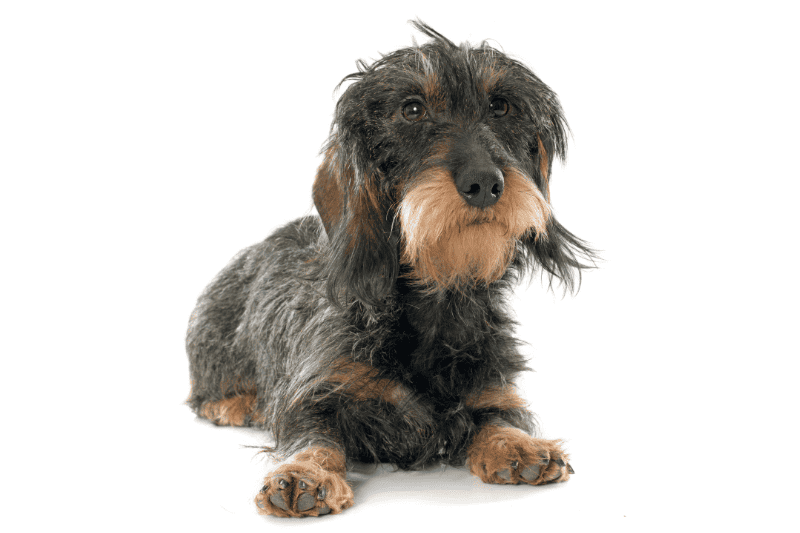
- A distinctive beard — the longer hair around the muzzle
- Prominent bushy eyebrows — giving the breed its characteristic expressive face
- Longer hair on the legs — sometimes forming small “skirts”
The wire coat is meant to be dense, harsh, and slightly oily — properties that protect the dog from weather and brambles. Many grooming mistakes (especially clipping with electric clippers) damage these qualities permanently.
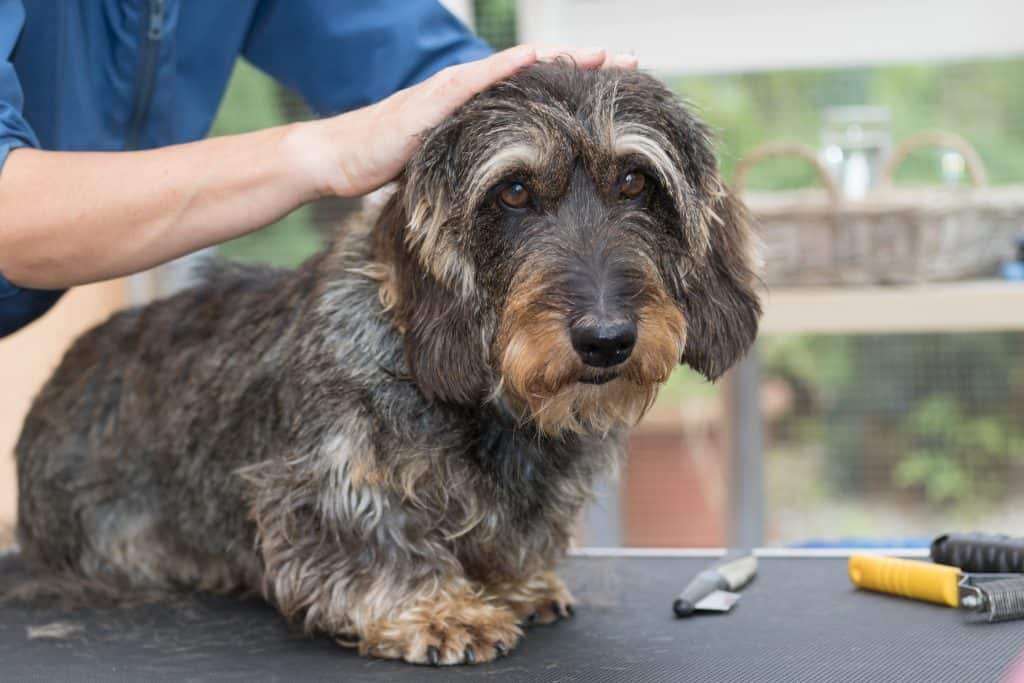
The 3 Wirehair Coat Textures
Within the wire-haired Dachshund variety, there are actually three different coat textures — and your grooming approach should be tailored to your dog’s specific coat type:
| Coat Type | Texture | Grooming Needs |
|---|---|---|
| Harsh (rough) wire | Coarse, dense, dry-feeling — the “ideal” breed standard | Hand-stripping every 4–8 weeks; minimal brushing |
| Soft (silky) wire | Softer, fluffier, more like a long-haired feel | More frequent brushing; mats easily; may need professional grooming |
| Smooth (pin-wire) wire | Short, slightly curly wire hair; often shorter coat overall | Easiest to maintain; lightest shedding; minimal hand-stripping needed |
Most wire-haired Dachshund owners aren’t sure which subtype they have — that’s normal. Run your hand against the lay of the coat; if it feels genuinely scratchy and resistant, you have harsh wire. If it feels softer and bends easily, you have soft wire. Pin-wire is obvious because the coat is noticeably shorter and slightly curled.
Related post: Which Type of Dachshund Sheds the Least?
Essential Grooming Tools You’ll Need
The right tools make wire-haired Dachshund grooming far easier — and a few of them are specific to wire coats rather than general dog grooming.
Brushes and Combs
- Slicker brush — for removing tangles and loose undercoat. Use gently.
- Stripping comb — the key tool for maintaining wirehair texture. Has serrated metal teeth for grabbing dead hair.
- Pin brush — for distributing oils and gentle daily brushing.
Hand-Stripping Tools
- Hand-stripping knife (or stripping stone) — used to pull out dead wire hairs by hand. The single most important tool for wire-haired Dachshund grooming.
Cutting Tools
- Grooming scissors or thinning shears — for shaping the beard, eyebrows, feet, and tail. Use sparingly.
What You Don’t Need
- Electric clippers — for most wire-haired Dachshunds, clippers are actually a problem. More on why in the next section.
- De-shedding tools like the FURminator — too aggressive for wirehair coats.
Hand-Stripping vs. Clipping: Why It Matters
This is the most important thing to understand about wire-haired Dachshund grooming, and one that surprises many new owners: wire-haired Dachshunds shouldn’t be clipped with electric clippers like Poodles or Schnauzers.
Why Hand-Stripping Is the Traditional Method
A wire coat consists of dead guard hairs ready to release from the follicle, surrounded by softer new hairs growing underneath. Hand-stripping pulls out these dead hairs at the root, allowing fresh wiry hairs to grow in with their proper:
- Texture — harsh and weather-resistant
- Color — rich and saturated
- Density — thick and protective
What Happens When You Clip a Wire Coat
Clippers cut hair off at skin level rather than removing it from the follicle. Over time, repeated clipping causes:
- Loss of harsh coat texture — coat becomes soft and fluffy
- Color fading — coat becomes dull or washed out
- Density loss — coat becomes thinner
- Permanent change in some cases — the coat may never recover its original texture
When Clipping Is Acceptable
That said, clipping isn’t forbidden — it’s just a trade-off:
- Pet Doxies whose appearance isn’t critical can be clipped without health consequences
- Senior dogs who find hand-stripping uncomfortable may be better suited to clipping
- Dogs being shown in conformation should always be hand-stripped
- Owners not concerned with show standards can choose convenience over coat purity
The bottom line: hand-stripping is more work but preserves the breed’s signature coat. Clipping is easier but gradually changes the coat. Choose based on your priorities.
Step-by-Step Brushing Routine
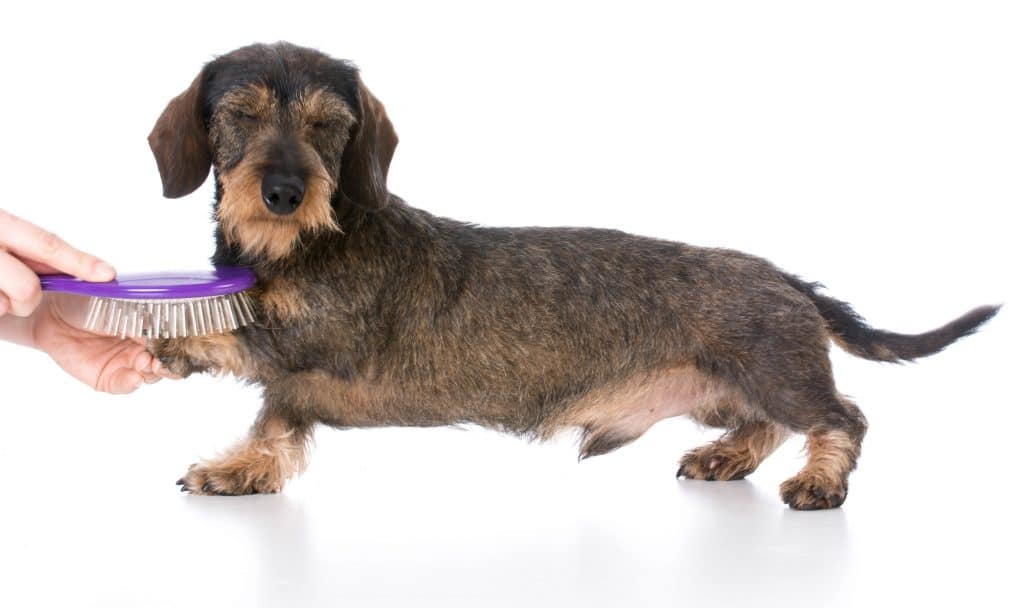
Regular brushing is the foundation of wire-haired Dachshund grooming. It removes loose hair, prevents mats, distributes natural oils, and gives you a chance to spot any skin issues early.
How Often to Brush
- Harsh wire: 1–2 times per week
- Soft wire: 3–4 times per week (mats much more easily)
- Pin-wire: 1 time per week
The Brushing Steps
- Choose a calm time and quiet location. Your dog should be relaxed.
- Start with the slicker brush. Work from neck to tail, brushing in the direction of hair growth. Use gentle pressure — never scrape the skin.
- Pay extra attention to mat-prone areas: behind the ears, under the front legs, on the chest, around the rear end, and in the beard.
- Switch to the steel comb. Run it through the entire coat to catch any small tangles the slicker missed. If the comb gets stuck, you’ve got a tangle to address.
- Address any tangles or mats gently. Use your fingers, a detangling tool, or a small amount of detangling spray. Never pull hard.
- Finish with the pin brush for a quick all-over distribution of oils.
- Reward your Doxie with a treat or some loving attention — make grooming a positive experience.
How to Hand-Strip Your Wirehaired Dachshund
Hand-stripping sounds painful but it isn’t — when done correctly, it only removes hairs that are ready to come out and your dog won’t feel pain. Many Doxies enjoy the sensation.
When to Hand-Strip
Hand-strip every 4–8 weeks depending on coat growth. You’ll know it’s time when:
- The coat looks “scruffy” and uneven
- Dead hair lifts easily when you gently pull
- The texture has softened
Step-by-Step Hand-Stripping
- Make sure the coat is dry and clean — never strip a wet or just-bathed dog.
- Pinch a small section of the longest, dullest hairs between your thumb and index finger (or use a stripping knife).
- Pull in the direction of hair growth — quick, firm motion. Ready-to-shed hairs come out easily; hairs still anchored won’t budge.
- Never force a hair out — if it resists, leave it for next time.
- Work in small sections along the back, sides, and neck.
- Strip lightly on the head and ears — these areas are sensitive.
- Skip soft areas: belly, armpits, inner thighs — these don’t have the same wire texture and should just be brushed and trimmed if needed.
- Take breaks! A full strip can take 1–2 hours. Many owners split it across multiple sessions.
Hand-Stripping Tips
- Rosin powder on your fingers gives you better grip on slippery hairs
- Start strips at the head and move toward the tail
- Brush first to remove any tangles before stripping
- If your dog hates it, consider rolling stripping (less aggressive) or professional grooming
Trimming the Beard, Eyebrows & Feet
The beard, eyebrows, and feet are the wire-haired Dachshund’s most distinctive features — and they need targeted care to look their best.
The Beard
Wire-haired Dachshund beards are food magnets and water collectors. Daily care prevents staining, odor, and matting:
- Wipe daily after meals and water drinks with a damp cloth
- Brush gently 2–3 times per week with a soft pin brush
- Trim every 4–6 weeks using grooming scissors — keep the natural shape, just shorten any straggly hairs
- Watch for food staining — switching to a non-staining food can help white-bearded dogs
The Eyebrows
Those expressive eyebrows do more than look adorable — they protect the eyes from debris. Keep them functional and tidy:
- Brush gently with the pin brush
- Trim only if the eyebrows are blocking vision or growing into the eyes
- Use scissors with rounded tips for safety around the eyes
- Never use clippers near the eyes
The Feet
Wirehair Doxies tend to grow long hair between the toe pads, which can become matted with dirt, gum, and salt:
- Check between the toes weekly
- Trim foot hair regularly with scissors — keep the natural Dachshund foot shape, just shorten the longest hairs
- Trim the hair between paw pads if it’s getting matted
- Check for stuck debris, foxtails, or burrs
Bathing Your Wirehaired Dachshund
Less is more when it comes to bathing wirehairs. Frequent baths actually damage the coat by softening the texture and stripping the natural oils that make the wire harsh and protective.
Bathing Frequency
- Every 6–8 weeks is plenty for most dogs
- More often only if your Doxie gets genuinely dirty
- Wipe with a damp cloth for spot cleaning between baths
Step-by-Step Bathing
- Brush thoroughly first. Water tightens existing tangles into mats that become very hard to remove.
- Use lukewarm water — never hot.
- Use a gentle dog-specific shampoo. A shampoo formulated for wirehair coats helps preserve texture. Avoid human shampoo and avoid “moisturizing” formulas that soften the coat.
- Lather gently from neck to tail. Keep shampoo away from eyes and ears.
- Rinse thoroughly — leftover shampoo causes itching and skin irritation.
- Skip conditioner for harsh wires (it softens the coat). If your dog has soft wire and frequent tangles, use a light dog conditioner sparingly.
- Towel dry with a microfiber towel — a microfiber dog towel absorbs much more water than cotton.
- Air dry rather than blow dry — high heat damages the wire texture. If you must use a dryer, use the lowest cool setting.
Related post: Dachshund Shedding & How to Manage It
Grooming Frequency & Schedule
Here’s a complete grooming schedule for your wire-haired Dachshund:
| Task | Frequency | Time Required |
|---|---|---|
| Quick brush | 2–3 times per week | 5–10 minutes |
| Beard wipe/clean | After every meal | 1 minute |
| Ear check | Weekly | 2 minutes |
| Eye wipe | As needed | 1 minute |
| Teeth brushing | Daily ideally; 2–3 times per week minimum | 2–3 minutes |
| Nail trim | Every 2–4 weeks | 5–10 minutes |
| Ear cleaning | Every 2–4 weeks | 5 minutes |
| Bath | Every 6–8 weeks | 20–30 minutes |
| Beard, eyebrows & feet trim | Every 4–6 weeks | 15–20 minutes |
| Hand-stripping session | Every 4–8 weeks | 30–60 minutes |
| Professional grooming | Every 8–12 weeks (optional) | 1–2 hours |
The schedule sounds daunting, but most days require just 5–10 minutes of attention. The longer sessions (bath, hand-strip, trim) happen every 4–8 weeks and can be split across multiple short sessions.

Nail Trimming
Long nails affect more than appearance — they cause real discomfort, change a dog’s gait, and over time can contribute to joint and back problems. According to VCA Animal Hospitals, dogs should have their nails trimmed when you can hear them clicking on hard floors.
How to Trim Nails Safely
- Use proper tools. Choose a quality dog nail clipper (scissor or guillotine style) or a nail grinder for a gentler approach.
- Find the quick. The pink area inside the nail is full of nerves and blood vessels — you never want to cut into it. In dark nails, trim only a small amount at a time.
- Trim a small amount. Take off the curved tip of the nail rather than aggressive cuts.
- Don’t forget the dewclaws on the inside of the front legs (and back if your dog has them).
- Keep styptic powder handy in case of nicks.
- Reward generously. Many dogs find nail trims stressful — treats help build positive association.
If you nick the quick, stay calm — apply styptic powder, hold pressure briefly, and the bleeding stops. It’s painful but not dangerous.
Ear Cleaning
Dachshunds’ long, floppy ears trap moisture, debris, and bacteria — making them prone to ear infections. Regular cleaning prevents most issues.
How to Clean Ears
- Check ears weekly for redness, discharge, odor, or excessive wax
- Use a vet-recommended dog ear cleaner — never human ear products, alcohol, or peroxide
- Apply ear cleaner per the product directions — usually a few drops into the canal
- Gently massage the base of the ear for 20–30 seconds
- Let your dog shake their head — this brings debris up
- Wipe the visible ear with a cotton ball or soft cloth
- NEVER use cotton swabs (Q-tips) deep in the ear canal — you can damage the eardrum
Use a gentle dog ear cleaner formulated for the breed. If you notice signs of infection (foul odor, dark discharge, excessive scratching, head tilt), see your vet rather than trying to treat at home.
Eye Care
Wire-haired Dachshunds need a little extra eye care because of their prominent eyebrows and beard — both of which can poke or carry debris into the eyes.
Regular Eye Care
- Wipe gently with a damp cloth or dog eye wipes to remove discharge and tear stains
- Check for excessive tearing, redness, cloudiness, or discharge
- Keep eyebrow hair trimmed so it doesn’t grow into the eyes
- Check for foreign objects after outdoor activities (especially in grassy or wooded areas)
When to See the Vet
- Persistent redness or swelling
- Cloudy or hazy appearance
- Yellow or green discharge
- Squinting or pawing at the eye
- Any visible injury or scratch
Dental Care
Dental disease is one of the most common health issues in Dachshunds — the breed’s small mouth often has crowded teeth that trap food and plaque. According to the American Veterinary Medical Association, by age 3, most dogs show some signs of dental disease without proper care.
Daily Dental Care
- Brush daily if possible with a dog-specific toothbrush and toothpaste. Human toothpaste contains xylitol, which is toxic to dogs.
- Start gradually. Let your Doxie taste the toothpaste first. Build up to gentle brushing over several sessions.
- Focus on the outside of teeth — most plaque accumulates there.
- Brush in small circular motions at the gumline.
- End on a positive note with praise and treats.
Supplemental Dental Care
- Dental chews — VOHC-approved options can help with plaque
- Annual professional cleanings by your vet (under anesthesia)
- Water additives for dogs who absolutely won’t tolerate brushing
- Dental diets — kibbles designed to scrub teeth as the dog chews
Related post: Why Do Dachshunds Have Bad Breath?
Common Grooming Mistakes to Avoid
Even well-meaning owners make these wire-haired Dachshund grooming mistakes:
- Clipping instead of hand-stripping. The biggest mistake — permanently softens the coat texture.
- Bathing too often. Strips natural oils and softens the wire coat.
- Skipping the beard. Food, water, and bacteria build up daily.
- Using human products. Shampoo, toothpaste, and skin products formulated for humans can be harmful for dogs.
- Using clippers near the eyes. A slip can cause serious injury.
- Inserting cotton swabs deep into the ear canal. Risk of eardrum damage.
- Cutting nails too short. Painful, causes bleeding, makes future trims traumatic.
- Brushing dry tangles aggressively. Use detangling spray or gentle fingers first.
- Using a hot dryer. Damages the wire coat texture.
- Ignoring the feet. Long foot hair traps debris and can mat between the toes.
- Skipping dental care. The most common preventable health issue in Dachshunds.
- Treating grooming as punishment. Make it a positive bonding experience with treats and praise.
When to See a Professional Groomer
Some owners do everything at home; others schedule regular professional grooming. Both approaches are valid. Consider a professional groomer when:
- You’re new to wire-haired grooming and want to learn proper hand-stripping technique
- You’re preparing for a dog show or breed competition
- Your dog has severe mats that need careful removal
- You can’t comfortably handle nail trims or your Doxie is anxious
- You have limited time for the every-4-8-week stripping sessions
- You want a periodic deep grooming alongside your at-home maintenance
Choosing a Groomer for Wirehairs
Not all groomers are familiar with wire-haired grooming. When choosing:
- Ask if they hand-strip wire coats (not all groomers do)
- Ask about their experience with terrier-coated breeds (Schnauzers, Scotties, Wire Fox Terriers, wirehaired Dachshunds)
- Request a meet-and-greet before the first appointment
- Visit the facility if possible — is it clean, calm, and safe?
- Ask about their grooming process — what tools they use, how long it takes
- Read reviews from other wirehair Dachshund or terrier owners
Expect to pay $80–$200 per session for full grooming with hand-stripping, depending on your location.
Frequently Asked Questions
How often should I groom my wire-haired Dachshund?
Brush 2–3 times per week, bathe every 6–8 weeks, hand-strip every 4–8 weeks, trim beard/eyebrows/feet every 4–6 weeks, trim nails every 2–4 weeks. Daily attention to teeth and beard cleaning is ideal.
Should I shave my wire-haired Dachshund?
No, shaving is strongly discouraged. Wire coats are double coats that regulate temperature and protect the skin. Shaving can cause post-clipping alopecia (patchy regrowth), sun sensitivity, and permanent coat texture changes. Hand-stripping or trimming is appropriate; shaving down to skin is not.
Can I clip my wire-haired Dachshund?
You can — but it gradually softens the wire texture and fades the coat color. For pet dogs whose appearance isn’t critical, clipping is fine. For show dogs or owners who want to preserve the authentic wirehair look, hand-stripping is the right choice.
Does hand-stripping hurt my dog?
No, when done correctly. Hand-stripping only removes dead hairs that are ready to release from the follicle. If a hair resists, leave it. Many dogs actually enjoy the sensation, like a gentle massage.
Why does my wire-haired Dachshund’s coat feel soft?
If your wire-haired Dachshund’s coat feels soft rather than coarse, it could be: (1) a naturally soft wire texture from the start, (2) overdue for hand-stripping, (3) too frequent bathing, (4) clipping in the past, or (5) age-related coat changes. Hand-stripping can sometimes restore harsh texture.
How long does grooming take?
Daily care: 5–10 minutes. Weekly brushing: 10–15 minutes. Bath: 20–30 minutes. Hand-stripping session: 30 minutes to 2 hours (often split into multiple sessions). A complete monthly grooming day, including all components, runs 1–2 hours.
Do wire-haired Dachshunds shed?
Less than smooth or long-haired Dachshunds, but yes, they do shed. Hand-stripping helps remove dead hair before it falls out. Pin-wire (short, curly wire) Dachshunds shed the least of all Dachshund varieties.
Can I groom my wire-haired Dachshund at home, or do I need a professional?
Most of the maintenance grooming can absolutely be done at home with the right tools. Many owners use a professional groomer every 8–12 weeks for hand-stripping and detailed trimming, while handling brushing, bathing, ear/eye/teeth/nail care themselves.
What’s the best brush for a wire-haired Dachshund?
A combination is best: a slicker brush for tangles, a steel comb for fine detail work, a stripping comb or stripping knife for removing dead wire, and a pin brush for distributing oils. Skip de-shedding tools like the FURminator — they damage wire coats.
How do I keep my Dachshund’s beard clean?
Wipe with a damp cloth after every meal and water break. Brush 2–3 times per week. Trim straggling hairs every 4–6 weeks. For persistent staining, ask your vet about switching to a non-staining dog food.
Final Thoughts: A Healthy Coat Is a Happy Coat
Grooming a wire-haired Dachshund isn’t quite like grooming any other breed — but once you understand the basics (especially the importance of hand-stripping over clipping), it becomes a manageable, even enjoyable, part of your routine.
Key takeaways to remember:
- Hand-strip rather than clip to preserve coat texture and color.
- Brush 2–3 times per week with the right tools for your dog’s specific wirehair texture.
- Don’t over-bathe — every 6–8 weeks is plenty.
- Pay daily attention to the beard — wipe after meals.
- Don’t skip nails, ears, eyes, and teeth — they’re as important as the coat.
- Make grooming a positive experience with treats, praise, and patience.
- Consider a professional every 8–12 weeks if hand-stripping feels overwhelming.
Regular grooming isn’t just about appearance — it’s quality time with your Doxie that keeps them healthy, comfortable, and looking their iconic wirehair best. Embrace the beard. Embrace the eyebrows. Embrace the routine. Your wire-haired Dachshund will thank you with years of healthy, scruffy, magnificent companionship.
Read more about Dachshund grooming: Do Dachshunds Need Grooming?
Disclaimer: This article is for informational purposes only and is not a substitute for professional veterinary advice. If your Dachshund has skin issues, recurrent ear infections, dental disease, or any other health concern, please consult your veterinarian.