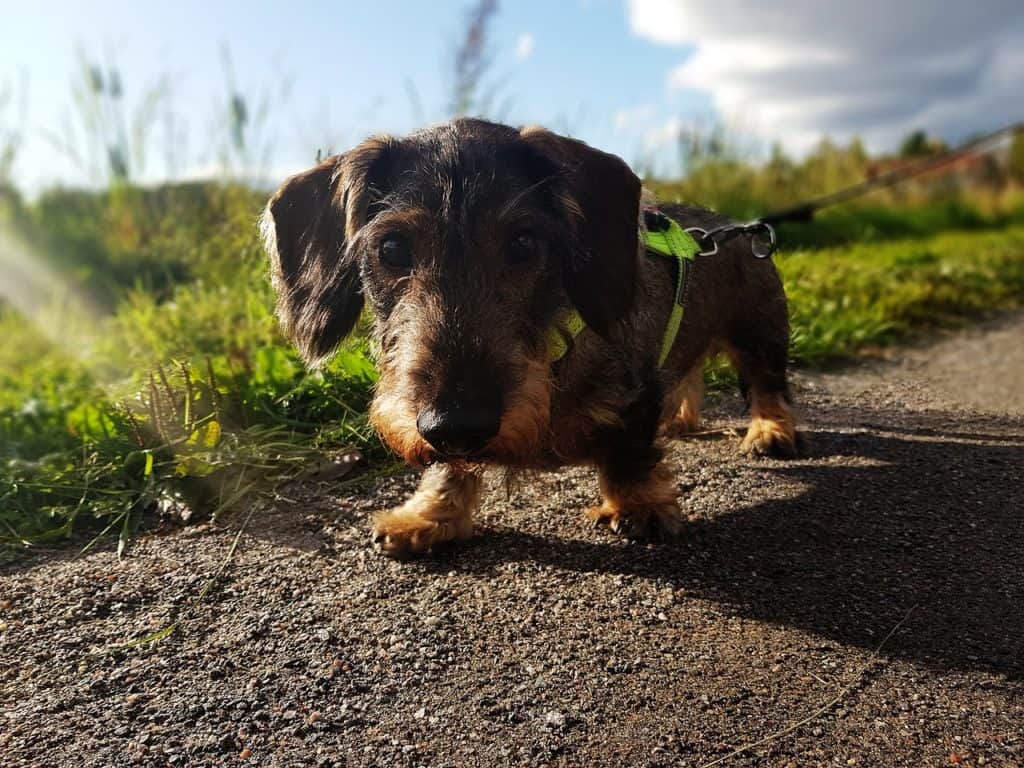

If you’ve ever spotted a Dachshund with a striking patchwork of white and color that makes them look almost like a tiny Dalmatian-Doxie hybrid — chances are you were looking at a Piebald.
Piebald Dachshunds are one of the most visually distinctive Dachshund varieties — instantly recognizable by their predominantly white coats with bold patches and spots of darker color. They’ve become increasingly popular over the past decade as social media spreads the love of unique Doxie patterns, and many would-be owners now actively seek out piebalds.
But there’s more to a piebald than meets the eye. They have unique genetics, distinct health considerations (including a real risk of deafness that owners should understand), and are frequently confused with dapple and double-dapple Dachshunds — even though those are very different genetically.
This complete guide walks you through everything: what makes a Dachshund “piebald,” the genetics behind the pattern, how piebalds differ from dapples and other patterns, important health considerations, how to find an ethical breeder, and what to expect when bringing a piebald Doxie into your life.
What Is a Piebald Dachshund?
A Piebald Dachshund is a Dachshund with a distinctive coat pattern consisting of large unpigmented (white) areas combined with patches of color. The white isn’t a separate color added on top — it’s an absence of pigment in those areas of the skin and coat.
Common visual characteristics:
- A predominantly white base coat (often making up 50%+ of the body)
- Distinct, well-defined patches of a darker color (black, red, chocolate, etc.)
- Small ticking (tiny spots) sometimes scattered in the white areas
- Symmetrical or asymmetrical color distribution — no two piebalds are identical
- The face is typically colored, with white usually starting on the chest and underside
Piebald is a pattern, not a color — meaning it can combine with virtually any Dachshund base color (black, red, chocolate, cream, blue, Isabella) to produce different piebald combinations.

The Genetics Behind the Piebald Pattern
The piebald pattern is caused by a recessive gene mutation affecting the gene known as MITF, which controls how pigment-producing cells (melanocytes) migrate during embryonic development. In piebald dogs, melanocytes fail to fully distribute across the skin and coat — resulting in unpigmented white areas where the colored cells never reached.
(Note: contrary to what’s sometimes claimed online, piebald is not caused by an overabundance of melanin — it’s actually the opposite. The white areas represent an absence of pigment cells.)
How Piebald Is Inherited
Piebald is recessive, which means a Dachshund needs two copies of the piebald gene (one from each parent) to display the piebald pattern. Here’s how that plays out:
| Parent 1 | Parent 2 | Likely Puppy Outcome |
|---|---|---|
| Piebald (sp/sp) | Piebald (sp/sp) | 100% piebald puppies |
| Piebald (sp/sp) | Non-piebald carrier (S/sp) | ~50% piebald, 50% carriers |
| Piebald (sp/sp) | Non-piebald non-carrier (S/S) | 0% piebald (all carriers) |
| Carrier (S/sp) | Carrier (S/sp) | ~25% piebald, 50% carriers, 25% non-carriers |
This is why ethical breeders DNA-test their breeding stock — knowing whether a parent carries the piebald gene is essential for producing healthy puppies and predicting coat patterns.
Piebald vs. Dapple vs. Double Dapple
These three patterns are frequently confused — sometimes even by sellers who should know better. Here’s a clear breakdown of how they differ.
| Pattern | Caused By | Looks Like | Inheritance | Health Risk |
|---|---|---|---|---|
| Piebald | MITF gene (recessive) | White base with large solid color patches | Recessive — both parents need the gene | Moderate (some deafness risk) |
| Dapple (called “merle” in other breeds) | PMEL/SILV gene (dominant) | Mottled or marbled spots of lighter color within darker color | Dominant — only one parent needed | Low (in single-dapple) |
| Double Dapple | Two copies of the dapple gene | Mostly white with patchy dapple areas | Result of breeding two dapples (NOT recommended) | HIGH — frequent blindness, deafness, eye defects |
The Critical Difference Visually
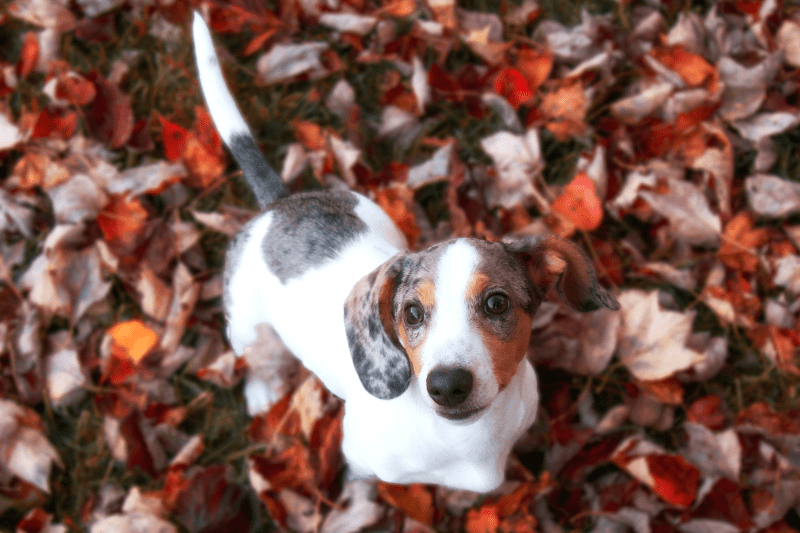
- Piebald: Large blocks of solid color sitting on a white base. The color patches look “painted on.”
- Dapple: Mottled, marbled, or “splashed” appearance within a single coat — like watercolor blending.
- Double Dapple: Looks somewhat similar to a piebald but is caused by something very different — and comes with serious health risks (more on this below).
⚠️ Why You Should Never Buy a Double Dapple
Double Dapple Dachshunds — produced by breeding two dapple parents together — frequently suffer from congenital blindness, deafness, and eye deformities, including missing eyes (microphthalmia) and severely underdeveloped eye structures. According to the Dachshund Club of America, breeding two dapples together is strongly discouraged by responsible breeders due to these well-documented health problems.
Some unethical breeders intentionally produce double dapples for their unique appearance, sometimes selling them as “piebalds” to unsuspecting buyers. A reputable breeder will never breed dapple to dapple — and will be transparent about the parentage and genetic testing of their dogs.
Related post: What Is a Dapple Dachshund?
Common Piebald Color Combinations
Since piebald is a pattern that overlays on any base color, you can find piebald Dachshunds in many color combinations. Common varieties include:
- Black & tan piebald — white base with black and tan patches; the most common piebald color
- Red piebald — white base with rich red/copper patches
- Chocolate & tan piebald — white base with brown and tan patches
- Cream piebald — white base with cream or light fawn patches (subtle contrast)
- Blue & tan piebald — rare; combines piebald pattern with the dilute “blue” coloring
- Isabella & tan piebald — rare; combines piebald with the dilute “Isabella” (fawn) coloring
- Wild boar piebald — white base with agouti/banded patches
Within each combination, the amount of white can vary dramatically — from minimal piebald (small white patches on a mostly-colored dog) to extreme piebald (mostly white with just a few colored patches). Generally, the more white in the coat, the higher the chance of deafness in that individual dog (more on this below).
Piebald Coat Types (Smooth, Long-Haired, Wire-Haired)
The piebald pattern can occur in all three Dachshund coat types:
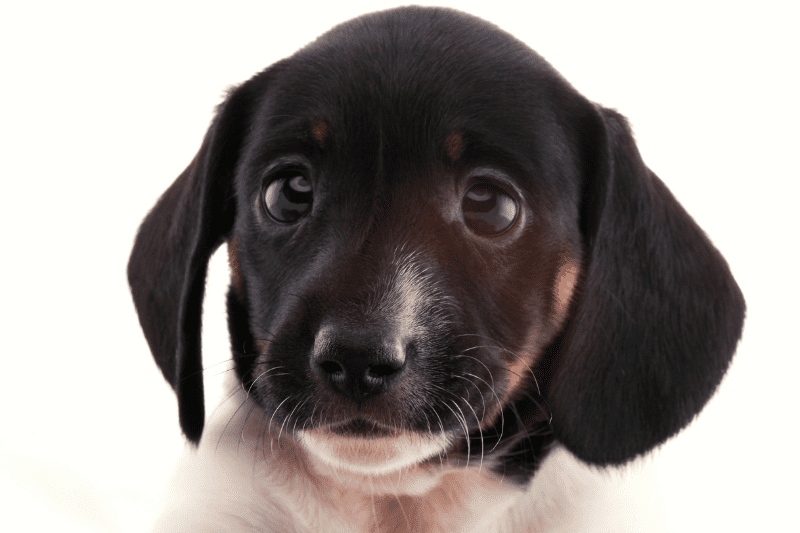
- Smooth-haired piebald — the most common coat. Short, sleek hair makes the piebald pattern especially crisp and easy to see.
- Long-haired piebald — silky, slightly wavy coat. The pattern is still visible but the longer hair softens the edges of the color patches.
- Wire-haired piebald — the rarest combination. The wiry texture can make the pattern look slightly less distinct compared to smooth coats.
Coat type doesn’t affect health or temperament — choose based on grooming preferences and aesthetic appeal.
Are Piebalds Recognized by the AKC?
The piebald pattern’s recognition status is a bit nuanced. According to the American Kennel Club, Dachshunds come in many colors and patterns — but piebald is not listed as an accepted pattern in the official AKC breed standard for the show ring.
What this means in practice:
- You can register a piebald Dachshund with the AKC
- You cannot show a piebald in AKC conformation events
- Piebalds are fully eligible for AKC performance events (agility, earthdog, etc.)
- Most kennel clubs internationally have similar policies
If conformation showing isn’t your goal — and for the vast majority of pet owners, it isn’t — the AKC’s standard has no practical effect on owning a piebald.
Related post: Types of Dachshunds: Sizes, Coats, and Colors
Are Piebald Dachshunds Rare?
Piebald Dachshunds are less common than solid-colored Dachshunds, but they’re not extraordinarily rare. The pattern has become more widely available as it’s grown in popularity, and many ethical Dachshund breeders specifically produce piebald lines.
Their relative rarity comes from genetics: because piebald is recessive, both parents must carry the gene for puppies to display the pattern. That limits how many piebalds appear in random litters of unrelated dogs.
The “rare” framing is sometimes used by unethical breeders to inflate prices. While piebalds are a less common pattern, that scarcity shouldn’t dramatically increase price — health, temperament, and ethical breeding practices matter far more than rarity.
Health Considerations for Piebald Dachshunds
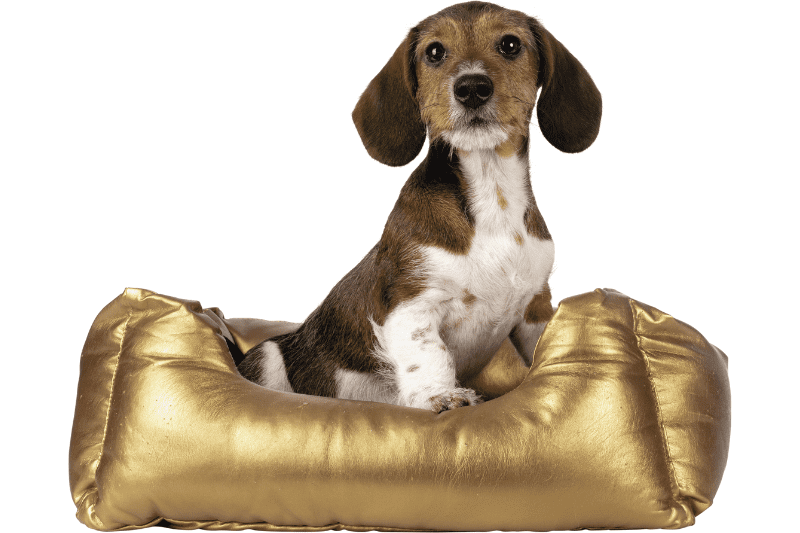
This is the most important section of the article — and the one most often missing from posts about piebald Dachshunds. While piebalds are generally healthy dogs, their genetics come with a few specific considerations that responsible owners should understand.
Deafness Risk
One of the most important things to know about piebald dogs (across all breeds, not just Dachshunds): they have a higher rate of congenital deafness than solid-colored dogs. According to the Louisiana State University School of Veterinary Medicine, which maintains an extensive database on canine deafness, the piebald gene is one of two main pigmentation genes associated with congenital sensorineural deafness in dogs.
Why does pigmentation affect hearing? The inner ear contains specialized cells that share a developmental origin with melanocytes (pigment cells). When the piebald gene prevents melanocytes from migrating to certain areas, it can also affect cells in the inner ear — sometimes resulting in deafness in one or both ears.
Important facts about piebald deafness:
- The more white in the coat, the higher the deafness risk. “Extreme” piebalds with mostly white coats have higher rates.
- Deafness can affect one ear (unilateral) or both ears (bilateral)
- It’s usually congenital — present from birth, not developing later
- Estimates suggest around 12% or more of piebald Dachshunds may have some degree of deafness
- A simple test called BAER (Brainstem Auditory Evoked Response) can definitively diagnose deafness in puppies
Living With a Deaf Piebald
A deaf dog can live a wonderfully happy, full life — they just need a slightly different approach to training and management:
- Use hand signals for commands
- Get their attention with visual cues, vibrations, or flashing lights
- Keep them on leash near roads (they can’t hear cars)
- Use a clearly engraved ID tag noting “Deaf Dog” with your contact info
- Approach them carefully when sleeping (no startling)
- Many deaf dogs train just as well — or better — than hearing dogs
If you’re considering a piebald puppy, ask the breeder whether the parents and puppies have been BAER-tested. Ethical breeders do this routinely.
Sun-Sensitive Pink Skin
Underneath the white parts of a piebald’s coat, the skin is typically pink (unpigmented) rather than dark. This makes piebald Dachshunds more vulnerable to:
- Sunburn — especially on the belly, nose, and any areas with sparse fur
- Skin cancer from chronic sun exposure
- Heat sensitivity in summer months
Practical protection tips:
- Limit outdoor time during peak sun hours (10am–4pm)
- Apply a pet-safe sunscreen to exposed pink skin (nose, belly, ears)
- Provide shade during outdoor time
- Use a UV-protective dog shirt for sunny outings
- Watch for skin irritation, redness, or unusual growths
Never use human sunscreen on dogs — some ingredients (especially zinc oxide and salicylates) are toxic if licked. Always use products specifically formulated for pets.
General Dachshund Health Issues
Beyond piebald-specific concerns, piebald Dachshunds share the same health predispositions as all Dachshunds:
- Intervertebral Disc Disease (IVDD) — the breed’s biggest health concern; affects all Dachshunds regardless of color
- Obesity — can worsen back issues
- Dental issues — small jaws often have crowded teeth
- Eye conditions — progressive retinal atrophy and cataracts
- Hip dysplasia — less common but possible
- Hypothyroidism — relatively common in older Dachshunds
The expected lifespan of a piebald Dachshund is 12–16 years, identical to other Dachshund varieties. With proper care, they live long, healthy lives.
Related post: Are Dachshunds a Healthy Breed?
Temperament & Personality
Coat pattern doesn’t affect personality. A piebald Dachshund will have all the classic Doxie personality traits, regardless of those striking patches:
- Bold and fearless — the breed’s hunting heritage shows up in confidence
- Loyal and affectionate — they bond strongly with their humans
- Stubborn and independent — a stubborn streak makes training a creative challenge
- Vocal — surprisingly loud bark for a small dog
- Curious and intelligent — great problem solvers
- Playful — high energy in short bursts, then nap time
- Prone to separation anxiety — they prefer not to be alone for long stretches
Many owners describe Dachshunds as having “big dog energy in a small body” — and piebalds are no exception. If you’re charmed by Dachshund personality in general, a piebald will charm you in identical ways.
Care, Grooming & Diet
Care requirements for a piebald Dachshund are mostly the same as for any Dachshund, with a few extra considerations.
Grooming
Grooming needs vary by coat type:
- Smooth piebalds: Weekly brushing with a soft pin brush or rubber grooming mitt
- Long-haired piebalds: Brushing every 2–3 days, plus periodic professional grooming
- Wire-haired piebalds: Brushing several times a week, plus hand-stripping or periodic professional grooming
One bonus: the white areas of a piebald’s coat can show dirt more visibly than solid-colored coats, so you may want to spot-clean dirty paws and bellies more often.
Diet
A high-quality, complete and balanced diet is essential. Look for a quality Dachshund-appropriate dog food with:
- Named animal protein as the first ingredient
- Omega-3 fatty acids for skin and coat health
- AAFCO-compliant labeling
- Appropriate calorie content (overfeeding is a major Dachshund problem)
Watch portion sizes carefully — Dachshunds are prone to obesity, and excess weight dramatically increases the risk of back problems.
Exercise
30–60 minutes of moderate exercise daily is ideal. Avoid:
- Jumping on/off furniture (causes back injury)
- Stairs (use ramps where possible)
- Rough play with much larger dogs
- Intense impact activities like jumping for frisbees
Finding a Reputable Piebald Breeder
Because of the genetic complexities involved with piebald breeding (and the very real risks if a breeder is careless or unethical), finding a responsible breeder matters more than for many color patterns.
Green Flags (Signs of a Reputable Breeder)
- DNA-tests parents for piebald, dapple, and other genes
- BAER tests puppies for hearing — and is transparent about results
- Never breeds dapple to dapple (no intentional double dapples)
- Provides health clearances for parent dogs (eye exams, patellas)
- Welcomes you to visit the puppies and meet the parents
- Asks YOU questions about your lifestyle and home
- Provides health guarantee and lifetime breeder support
- Will take a puppy back at any age if you can’t keep them
- Doesn’t sell to pet stores
- Has limited litters per year
Red Flags (Avoid These Breeders)
- Won’t let you see where the puppies were raised
- Offers multiple breeds at once
- Always has puppies available
- Doesn’t ask you any questions
- Promotes “rare” colors aggressively (especially double dapples)
- No health testing of parents
- Sells puppies under 8 weeks old
- Offers significant discounts for cash or quick sales
- Won’t provide health records or registration paperwork
Consider checking with the Dachshund Club of America for their breeder referral program, or look for breeders affiliated with reputable regional Dachshund clubs.
How Much Does a Piebald Dachshund Cost?
Piebald Dachshund prices vary widely depending on breeder reputation, location, and the specific color combination. Here’s a general range in the U.S.:
| Source | Typical Price Range |
|---|---|
| Reputable breeder (standard piebald) | $1,500 – $3,500 |
| Reputable breeder (rare color piebald) | $2,500 – $5,000+ |
| Rescue / Dachshund-specific rescue | $200 – $500 adoption fees |
| Backyard breeder or “rare colors” mill | $1,000 – $4,000 (NOT recommended) |
Don’t make price the deciding factor. A “bargain” piebald from a backyard breeder may save you a few hundred dollars upfront but cost you thousands in vet bills for preventable health problems — not to mention the emotional cost of dealing with a poorly bred dog.
Adopting from a Dachshund rescue is also a wonderful option. Many piebalds end up in rescue, and you’d be giving an existing dog a wonderful home while saving on initial costs.
Frequently Asked Questions
What is a piebald Dachshund?
A piebald Dachshund is a Dachshund with a predominantly white coat featuring large patches and spots of a darker color. The pattern is caused by a recessive gene (MITF) that prevents pigment-producing cells from fully migrating during embryonic development.
Are piebald Dachshunds rare?
They’re less common than solid-colored Dachshunds because both parents must carry the recessive piebald gene to produce piebald puppies. However, they’re not extraordinarily rare — many ethical breeders produce piebald lines.
Is a piebald Dachshund the same as a dapple?
No. Piebald is caused by a recessive gene affecting pigment migration; dapple is caused by a dominant gene producing mottled coat patterns. Visually, piebalds have large white areas with clear color patches, while dapples have a marbled/mottled appearance within colored areas.
Are piebald Dachshunds prone to deafness?
Yes, somewhat — piebald dogs have a statistically higher rate of congenital deafness than solid-colored dogs. Estimates suggest around 12% or more of piebald Dachshunds may have some degree of hearing loss. BAER testing can definitively diagnose deafness in puppies, and ethical breeders should test their litters.
What’s the difference between piebald and double dapple?
Double dapple is caused by breeding two dapple parents together — producing puppies with two copies of the dapple gene. Double dapples often have serious health problems (blindness, deafness, eye deformities) and ethical breeders never intentionally produce them. Piebald, by contrast, is a separate genetic pattern with significantly fewer health risks.
Are piebald Dachshunds AKC recognized?
Piebald Dachshunds can be registered with the AKC, but the pattern isn’t accepted in AKC conformation shows. They can compete in all performance events (agility, earthdog, obedience, etc.).
How much does a piebald Dachshund cost?
From a reputable breeder, expect $1,500–$3,500 for a standard piebald and $2,500–$5,000+ for rare color piebalds. Adoption from a Dachshund rescue is significantly cheaper at $200–$500.
Do piebald Dachshunds shed?
Yes — they shed about the same amount as any Dachshund (moderately, with seasonal peaks). Coat type matters more than pattern when it comes to shedding levels.
Are piebald Dachshunds good family pets?
Yes! Their personality is identical to any other Dachshund — loyal, affectionate, playful, and devoted. Like all Dachshunds, they do best in homes that understand their stubborn streak, exercise needs, and back-safety requirements.
Can you breed a piebald Dachshund with a dapple?
Yes, this can be done safely (piebald + dapple is fine genetically), but the resulting puppies’ patterns are difficult to predict. The critical thing to avoid is breeding dapple to dapple, which produces double dapples with serious health risks.
Affiliate disclosure: This post contains a few Amazon affiliate links. If you click through and make a purchase, we may earn a small commission at no extra cost to you. We only recommend products we believe in — and your support helps keep Dachshund Central running. Thank you!
Final Thoughts: Beauty With a Big Personality
Piebald Dachshunds are more than just a pretty coat. They carry the same loving, loyal, stubborn, hilarious personality as any other Dachshund — wrapped in a uniquely beautiful patchwork pattern that genuinely makes them one-of-a-kind. Whether you’re drawn to a classic black-and-white piebald or something rarer, you’re choosing a dog that will be every bit as charming as it is striking.
The key takeaways:
- Piebald is a pattern, not a color — it can combine with virtually any Dachshund color.
- It’s caused by a recessive gene, which is why both parents must carry it.
- Piebalds are different from dapples — and very different from the high-risk double dapples.
- Watch for deafness and ask your breeder about BAER testing.
- Protect their pink skin from sun exposure.
- Only buy from ethical breeders who DNA-test and never breed dapple to dapple.
- Their personality is full Dachshund — and that’s a wonderful thing.
If you’ve found a reputable breeder, asked the right questions, and prepared your home for a Doxie’s quirks — a piebald Dachshund will reward you with years of loving companionship and an endless supply of “look at my dog!” moments.
Disclaimer: This article is for informational purposes only. Coat color genetics in dogs is complex, and recommendations on health testing and breeding practices should be confirmed with a licensed veterinarian or canine geneticist. If you’re considering buying or adopting a piebald Dachshund, work with a reputable breeder or breed-specific rescue.