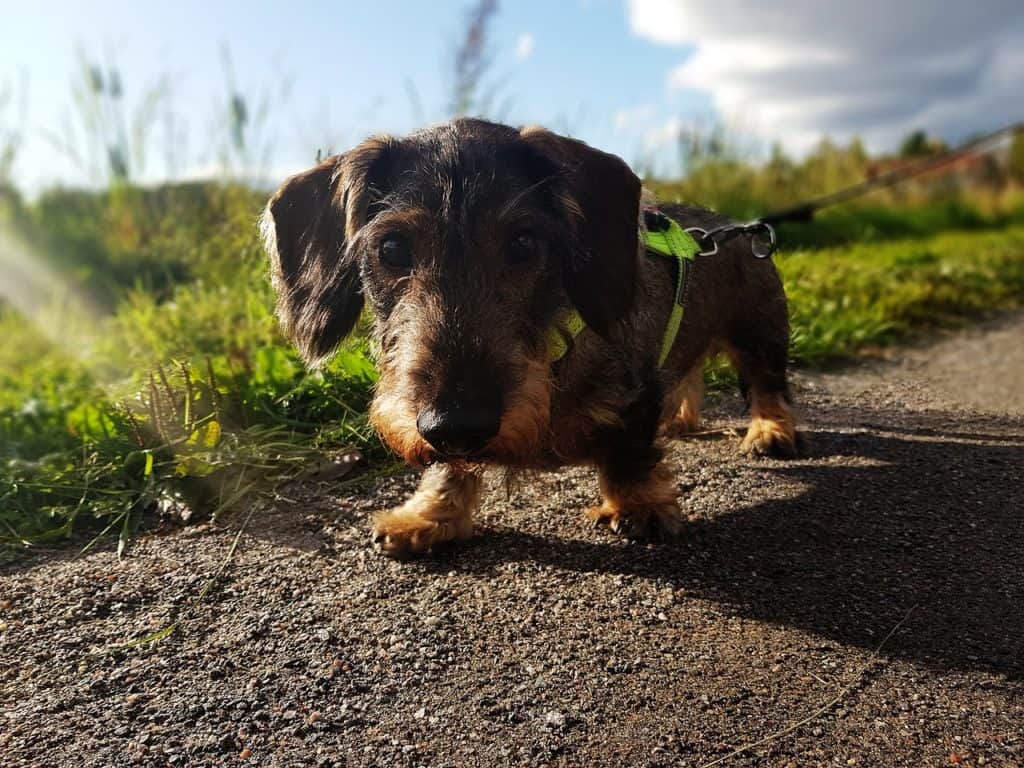
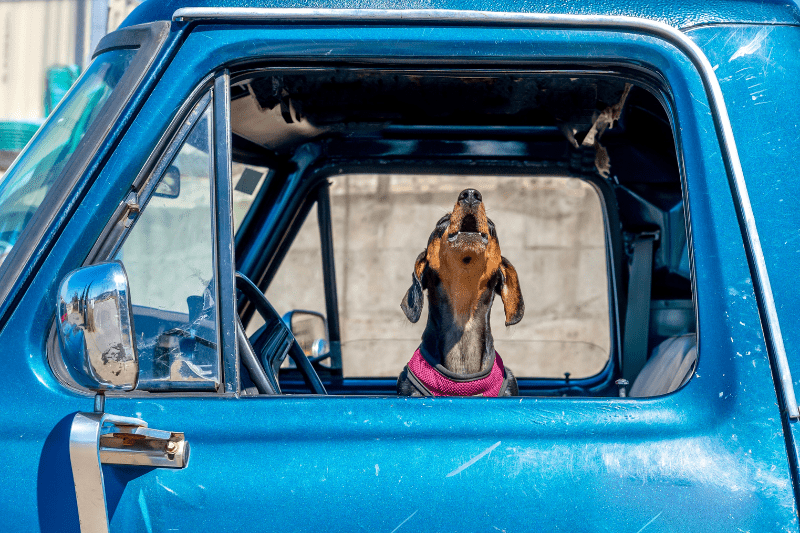
There’s something irresistible about the idea of a road trip with your Dachshund — those little paws on the seat, ears flapping in the breeze, and the world flying by. But before you load the car and hit the highway, there’s one truth every Doxie owner needs to know:
An unrestrained dog in a car isn’t just a distraction — it’s a serious safety risk. In a 30 mph crash, a 20-pound dog becomes a 600-pound projectile. And given Dachshunds’ fragile, IVDD-prone backs, even a sudden stop without proper restraint can cause real injury.
The good news? With the right gear, a little prep, and smart pit-stop planning, road-tripping with your Dachshund can be one of the best things you do together. This complete guide walks you through it all — what to buy, what to pack, how to keep your Doxie calm, and how to handle every step of the journey safely.
Table of Contents
- Why Car Safety Matters Even More for Dachshunds
- Before the Trip: Preparation Checklist
- Choosing the Right Car Restraint
- Golden Rules for Riding in the Car
- The Ultimate Dachshund Road Trip Packing List
- During the Trip: Pit Stops and Driving Tips
- The Hot Car Warning Every Owner Needs
- Pet-Friendly Accommodations
- What If Your Dachshund Hates the Car?
- Frequently Asked Questions
- Final Thoughts
Why Car Safety Matters Even More for Dachshunds
Every dog deserves to ride safely — but Dachshunds have one specific reason to be even more cautious: their backs.
Dachshunds are highly prone to Intervertebral Disc Disease (IVDD), a serious spinal condition that can be triggered by sudden impacts, jumps, twists, or hard stops. According to the American Kennel Club, even minor trauma can cause disc damage in this breed.
That makes proper car restraint about more than crash safety — it’s about preventing the everyday jolts and lurches that can hurt your Dachshund’s spine. A securely restrained Doxie:
- Won’t be thrown forward in sudden braking
- Can’t jump from seat to seat (huge IVDD risk)
- Won’t slide off and land in the footwell
- Stays calmer because they have a defined, secure space
- Won’t distract you while you drive
In other words: car safety is Dachshund back-health.
Before the Trip: Preparation Checklist
Good road trips start days (or weeks) before you turn the key. Here’s how to set your Dachshund up for success.
Vet Checkup and Health Prep
Schedule a checkup at least 1–2 weeks before a long trip. Confirm:
- Vaccinations are up to date
- Flea, tick, and heartworm prevention is current
- Microchip information is correct (this is a big one)
- Any prescriptions are filled with extra in case of delays
- Your Doxie is healthy enough for the trip
Ask your vet for a copy of your dog’s medical records and rabies certificate to keep in the car — many states and pet-friendly hotels can ask for them. If you’re crossing state or international borders, check entry requirements ahead of time.
Practice With Short Trips First
If your Dachshund only rides in the car for vet visits, they probably associate cars with bad things. Reverse that.
The American Kennel Club recommends letting your dog wear their travel harness around the house first, then taking gradually longer practice trips:
- Day 1–3: Harness on at home with treats. Just sit in the parked car, engine off.
- Day 4–7: Engine on, no driving. Then a 5-minute drive around the block.
- Week 2: 15–20 minute drives to fun places (park, pet store).
- Week 3: A 1–2 hour drive — the dress rehearsal.
By the time you take the actual trip, your Doxie will associate the car with adventure, not anxiety.
Managing Car Sickness
Car sickness is common in young dogs and tends to improve with age. Common signs include drooling, whining, lip-licking, panting, and vomiting. To prevent it:
- Don’t feed a full meal within 3 hours of departure
- Keep the car cool and well-ventilated
- Open windows slightly to equalize air pressure
- Position your Doxie so they can see forward, not sideways
- Take breaks every 1–2 hours
If your Dachshund still gets sick, your vet can prescribe maropitant (Cerenia), the gold-standard anti-nausea medication for dogs. Over-the-counter options like Benadryl or ginger may help, but always check dosing with your vet first.
Choosing the Right Car Restraint
This is the single most important decision you’ll make for road safety. Most pet “safety” products on the market haven’t been crash tested — and many of those that have been tested have failed. According to the independent Center for Pet Safety (CPS), the only nonprofit that crash-tests pet products to consistent standards, the vast majority of restraints on Amazon and big-box stores fall apart on impact.
Here are the four restraint options for Dachshunds, ranked by safety.
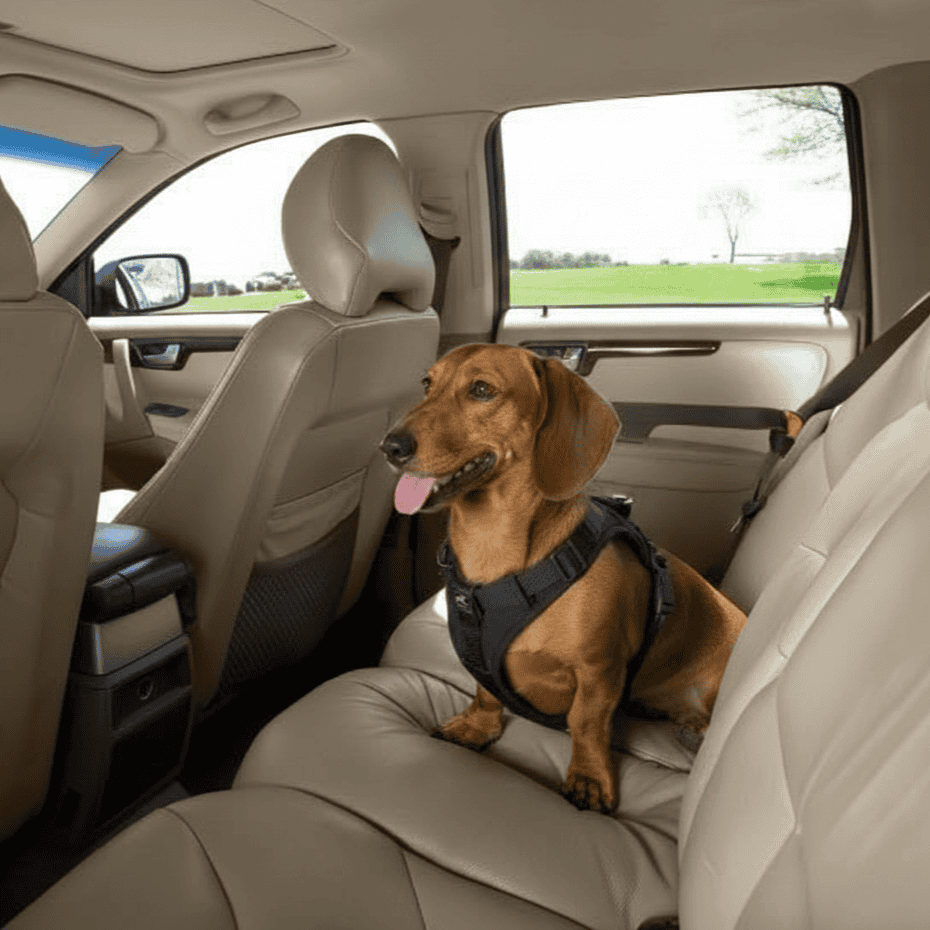
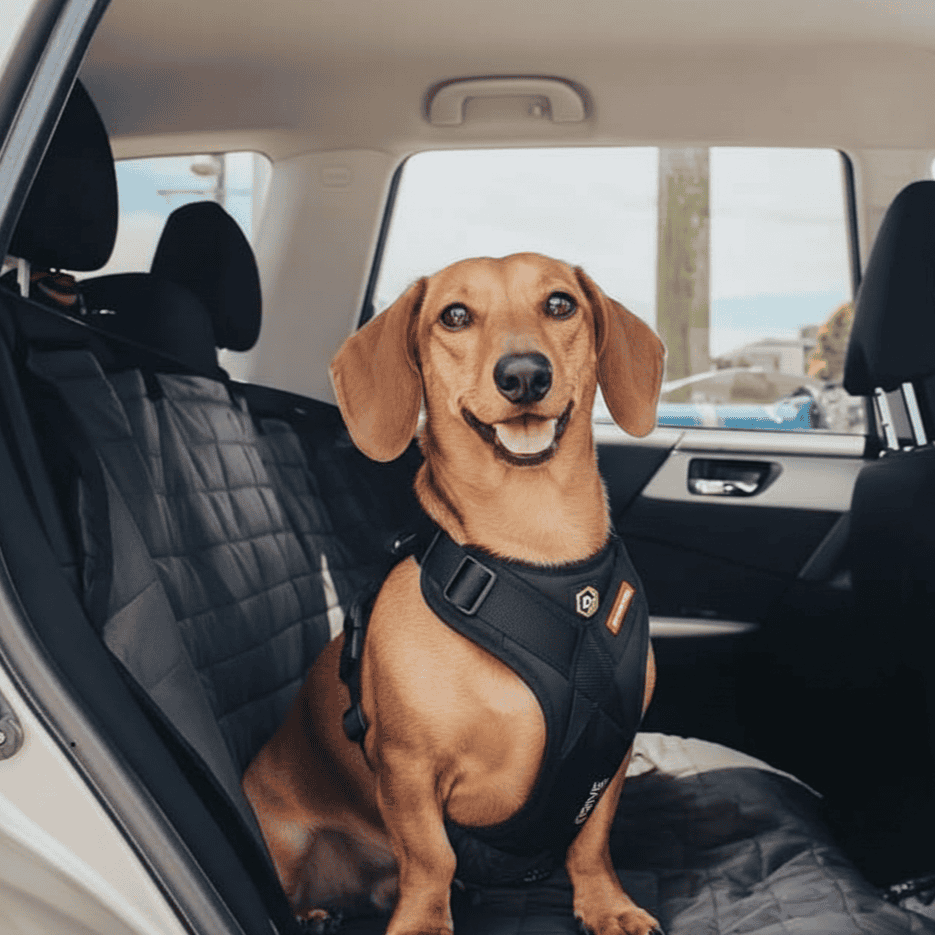
1. Crash-Tested Harness (Best for Most Dachshunds)
A crash-tested harness clips your dog’s body to the seat belt system, distributing impact forces across the chest. For most adult Dachshunds, this is the safest, most practical option.
What to look for:
- Center for Pet Safety (CPS) certification — the gold standard
- Tested to FMVSS 213 child safety standards
- Strength-rated metal hardware (not plastic clips)
- Padded chest plate to absorb force
- Multiple seat belt contact points
- The right size for your dog’s weight
Top crash-tested brands consistently recommended by independent testers include Sleepypod Clickit, Ruffwear Load Up, Kurgo Tru-Fit (Enhanced Strength), and EzyDog Drive. Always check the manufacturer’s current weight ratings before buying.
Avoid: regular walking harnesses with seat belt loops added on, “no-pull” harnesses for car use, and any harness that doesn’t list crash test results.
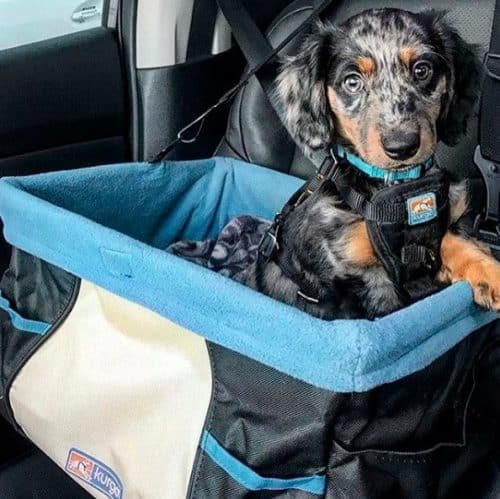
2. Booster Seat or Dog Car Seat
Booster seats are popular for small breeds — they let your Dachshund see out the window and feel less car-sick. But here’s the catch: most booster seats are comfort products, not safety devices. They’re typically not crash tested.
If you use a booster seat, always pair it with a crash-tested harness — never rely on the booster’s tether alone. Look for booster seats that strap securely to the back seat with a seat belt, not just headrest hooks.
3. Crash-Tested Travel Crate
A properly secured travel crate is one of the safest options — but only if it’s actually crash tested and properly anchored. According to CPS, this means strapping the crate to the cargo area or back seat using multiple anchor points, never just sitting it loose.
Crash-tested crate brands include Mammoth (heavy duty) and Gunner (for small dogs). A standard wire or plastic crate from the pet store is not a safety device — it’s a containment box.
4. Soft Carrier (Best for Miniature Dachshunds Under 15 lbs)
For miniature Dachshunds, a crash-tested soft carrier secured to the seat with the seat belt routed through dedicated loops is a great option. The Sleepypod Mobile Pet Bed is widely considered the gold standard — it’s been independently crash tested and earned a 5-star CPS rating.
Golden Rules for Riding in the Car
No matter what restraint you use, these rules apply to every trip:
1. Always Use the Back Seat
Front-seat airbags can seriously injure or kill a small dog when they deploy. The back seat (or cargo area for SUVs) is always safer.
2. Never on Your Lap
Driving with a dog on your lap is illegal in some states and dangerous everywhere. It’s a triple risk: distraction, airbag injury, and projectile danger in a crash.
3. No Heads Out the Window
It looks adorable, but flying debris, insects, and sudden braking can cause eye injuries, jaw fractures, or worse. Crack the window for fresh air, but keep your Doxie’s head inside.
4. Never in the Truck Bed
An open pickup truck bed is one of the most dangerous places a dog can ride. Even with a tether, dogs can be thrown out, hit by debris, or scalded by the hot metal.
5. Protect the Seats
A waterproof, hammock-style seat cover protects against accidents, drool, and shedding — and the hammock design prevents your Dachshund from falling into the footwell. Bonus: it makes cleanup easy.
6. Block Sun Glare
Sunshades on the back windows keep your Doxie cool and prevent overheating. This is especially important for darker-coated Dachshunds.
The Ultimate Dachshund Road Trip Packing List
Here’s what to pack for a smooth, safe trip with your Doxie. Print this and check it off:
Safety & ID Essentials
- Crash-tested harness or carrier (the right size)
- Backup leash and collar with up-to-date ID tag
- Microchip number written down somewhere accessible
- Recent photo of your dog (in case of separation)
- Copy of vaccination records and rabies certificate
- Vet’s contact info + the nearest 24-hour vet at your destination
Food & Water
- Their regular food (don’t change foods on a trip!)
- Collapsible bowls or a travel water bottle
- Bottled water (sudden water source changes can upset stomachs)
- Treats and chews
Comfort & Routine
- Familiar bed or blanket from home
- 1–2 favorite toys
- A worn t-shirt with your scent (great for separation calm)
- Their regular crate or carrier setup
Cleanup
- Plenty of poop bags
- Pet-safe wipes (for paws and accidents)
- Paper towels and a small spray bottle of pet-safe cleaner
- Old towels
Health & First Aid
- Any current medications (with extra in case of delays)
- Anti-nausea or anti-anxiety meds if your vet prescribed them
- Pet first-aid kit (gauze, bandages, antiseptic, tweezers, styptic powder)
- Tick remover
During the Trip: Pit Stops and Driving Tips
Stop Every 2 Hours
Your Dachshund needs regular breaks for bathroom, water, and stretching. Aim for a 15–20 minute stop every 2 hours. Look for rest areas with grassy patches and avoid letting your dog walk on hot pavement.
Keep a Leash on at All Times
Even a usually-obedient Doxie can bolt in a new environment. Always leash up before opening the car door.
Drive Smoothly
Sudden braking, sharp turns, and rapid acceleration are hard on a Dachshund’s back and stomach. Drive like you have a sleeping baby in the back — because you basically do.
Watch the Temperature
Keep the cabin between 68–75°F. Use back-seat sunshades. Don’t blast the AC directly on your dog.
Stick to Their Routine
Try to feed, walk, and bathroom your Dachshund at roughly the same times you would at home. Familiarity reduces stress.
The Hot Car Warning Every Owner Needs
Never, ever leave your Dachshund alone in a parked car. Not for “just a minute.” Not with the windows cracked. Not in the shade.
According to the American Veterinary Medical Association, on a 70°F day, a parked car can reach 89°F in just 10 minutes and 104°F within 30 minutes. On an 85°F day, it can hit 102°F in 10 minutes — well into heatstroke territory.
Dachshunds, with their compact bodies and limited cooling ability, are especially vulnerable. If you need to stop somewhere your dog can’t go, plan ahead:
- Use the drive-thru
- Eat at pet-friendly outdoor patios
- Take turns staying with the dog if traveling with someone
- Look for stores with curbside pickup
Many U.S. states now have laws allowing bystanders to break car windows to rescue a dog in distress. Don’t be the owner who finds out the hard way.
Pet-Friendly Accommodations
Not all “pet-friendly” hotels are actually convenient for Dachshund owners. Some charge hefty pet fees, others have weight limits or breed restrictions, and a few only allow dogs in certain rooms.
When booking, always confirm:
- Pet fees — they can range from $25 to $150+ per stay
- Weight or breed limits
- Whether dogs can be left alone in the room (many require they’re never alone)
- Designated pet relief areas
- Walking-friendly grounds nearby
Reliable pet-friendly chains include Kimpton, La Quinta, Best Western, Red Roof Inn, Drury Hotels, and Motel 6. Vacation rental sites like Airbnb and Vrbo let you filter for pet-friendly properties — and you can usually find more space (and more freedom) than at a hotel.
Pro tip: book pet-friendly accommodations even for an overnight emergency stop. You don’t want to be hunting for one at 11 PM.
What If Your Dachshund Hates the Car?
Some Dachshunds love the car instantly. Others — especially anxious or rescue Doxies — find it terrifying. If your dog falls into the second group, don’t force a long road trip until you’ve worked on it.
Steps to help an anxious traveler:
- Identify the trigger. Is it the noise? The motion? Past trauma? Carsickness?
- Build positive associations. Feed meals near the parked car. Toss treats inside without leaving.
- Do very short drives ending at fun places — the park, a friend’s house, never the vet.
- Try calming aids. Pheromone sprays (Adaptil), Thundershirts, or vet-prescribed anxiety medication.
- Talk to your vet for severe anxiety. Trazodone or gabapentin are commonly prescribed for travel anxiety.
If your Dachshund consistently shows signs of severe distress — panting, drooling, vomiting, trembling — even after gradual desensitization, sometimes the kindest choice is to skip a long road trip and explore other options like pet-sitters or boarding.
Related post: How can I travel with my Dachshund?
Frequently Asked Questions
How long can a Dachshund ride in a car?
With proper breaks every 2 hours, a healthy adult Dachshund can comfortably ride 8–10 hours a day. Puppies and senior dogs need more frequent stops (every 1–1.5 hours) and shorter total drive times.
Should my Dachshund ride in a crate or a harness?
Both can be safe if crash-tested. Harnesses give your dog more freedom to lie down and look around. Crates offer more containment and can feel den-like. The right choice depends on your dog’s preferences and your vehicle.
Can my Dachshund sit in the front seat?
It’s not recommended. Airbags are designed for adult humans and can seriously injure or kill a small dog when they deploy. If you absolutely must, deactivate the passenger airbag and use a crash-tested restraint.
How do I know if my dog has motion sickness?
Common signs include excessive drooling, lip-licking, whining, panting, restlessness, and vomiting. It’s most common in puppies and often improves with age and exposure.
Is it safe to drive with the windows down?
Cracking windows for ventilation is fine, but never let your Dachshund stick their head fully out — flying debris and insects can cause serious eye injuries and ear damage from the wind.
Do I need to feed my Dachshund less before a road trip?
Don’t skip a meal entirely, but do feed at least 3 hours before departure to reduce car sickness. Avoid feeding while the car is moving.
What if my Dachshund needs to go to the bathroom mid-drive?
Plan a stop every 2 hours regardless. If they whine, pace, or signal urgency between stops, find a safe pull-off — accidents happen, but bathroom emergencies are stressful for everyone.
Final Thoughts: Your Dachshund’s Best Co-Pilot
A road trip with your Dachshund can be one of the great joys of dog ownership — provided you do it right. The combination of a crash-tested restraint, smart pre-trip prep, regular pit stops, and sensible packing turns potential stress into pure adventure.
The key is treating your Doxie’s safety with the same seriousness you’d treat your own. They can’t buckle themselves in. They don’t know about hot car deaths or airbag dangers. They’re trusting you completely — and a few small investments in the right gear and habits can keep them safe for thousands of miles to come.
So pack the bags, double-check the harness, and hit the road. Your Dachshund is about to become the world’s best (and shortest-legged) co-pilot.
Disclaimer: This article is for informational purposes only and is not a substitute for professional veterinary or safety advice. Always consult your veterinarian before traveling with your dog, especially if they have underlying health conditions, and verify safety product certifications directly with manufacturers.
Affiliate disclosure: This post contains affiliate links. If you click through and make a purchase, we may earn a small commission at no extra cost to you. We only recommend products we believe in — and your support helps keep Dachshund Central running. Thank you!